

Çağlayan Yıldız ile röportajımızı Türkçe olarak okumak istiyorsanız, lütfen şurayı tıklayın.
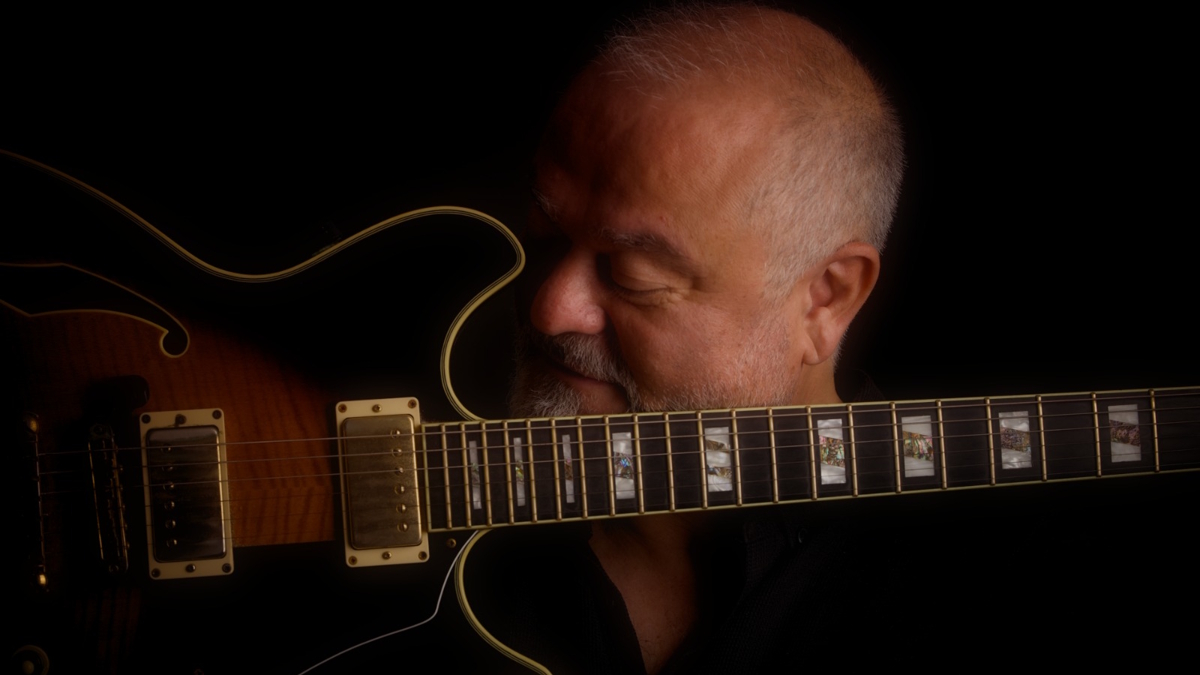
Looking at Çağlayan Yıldız’s life, it is hard to know where to begin. Here is a musician who graduated from medical school and chose not to practise medicine; who never put down his guitar or bass, set off for India, studied Music in Europe, spent years performing, composed, taught, and is still pursuing new things to learn. Today, he is also bringing all that experience together with technology under the umbrella of Puja Music. His latest project, Jazz History Atlas, lets us rediscover more than a century of jazz through musicians, recordings, and the relationships that connect them. Our conversation with Çağlayan Yıldız began with his decision to leave medicine and ranged across freedom in Music, friendship, AI, and jazz history. Along the way, I was introduced to his own invention, “Budiilizm”—roughly, “Not-this-ism”. It has just one rule: approach everything by first saying “Bu diil”—“This isn’t it.” I suspect that holds something of the key to his whole story.
■
Mine Gürevin: Çağlayan, first of all, thank you so much for making time and agreeing to this interview. Your life story is hardly a conventional musician’s biography: Ege University’s Faculty of Medicine, then jazz at Bilkent, Music studies in Amsterdam and Utrecht… Looking back now, does graduating as a doctor and devoting your life to Music seem a perfectly natural decision, or was it a major rupture at the time?
Çağlayan Yıldız: First of all, thank you for taking the time to put this interview together. Let me start with a little story; I think it will shed some light on the answers that follow.
A very close friend and I once decided, on a trip, to found a religion called “Budiilizm” [a play on Budizm, Turkish for Buddhism, and “bu diil”, spoken Turkish for “bu değil”: “this isn’t it”]. It has only one requirement, one act of worship: approach everything by first saying “bu diil”: “this isn’t it”.
Almost since childhood, I had felt we were living within a system that was hostile to the very essence of being human. I had decided to do everything I could to avoid being part of it. I always wanted to change the system wherever I could, and where I couldn’t, to look for ways of stepping outside it while holding on to my own values.
To return to your question… Devoting my life to Music after graduating from medical school felt quite natural to me then, and it still does. I was deeply in love with Music; I wanted to spend my whole life making Music. Nor did I want to be part of the medical system in Türkiye. It was many times better then than it is today, but it still wasn’t for me.
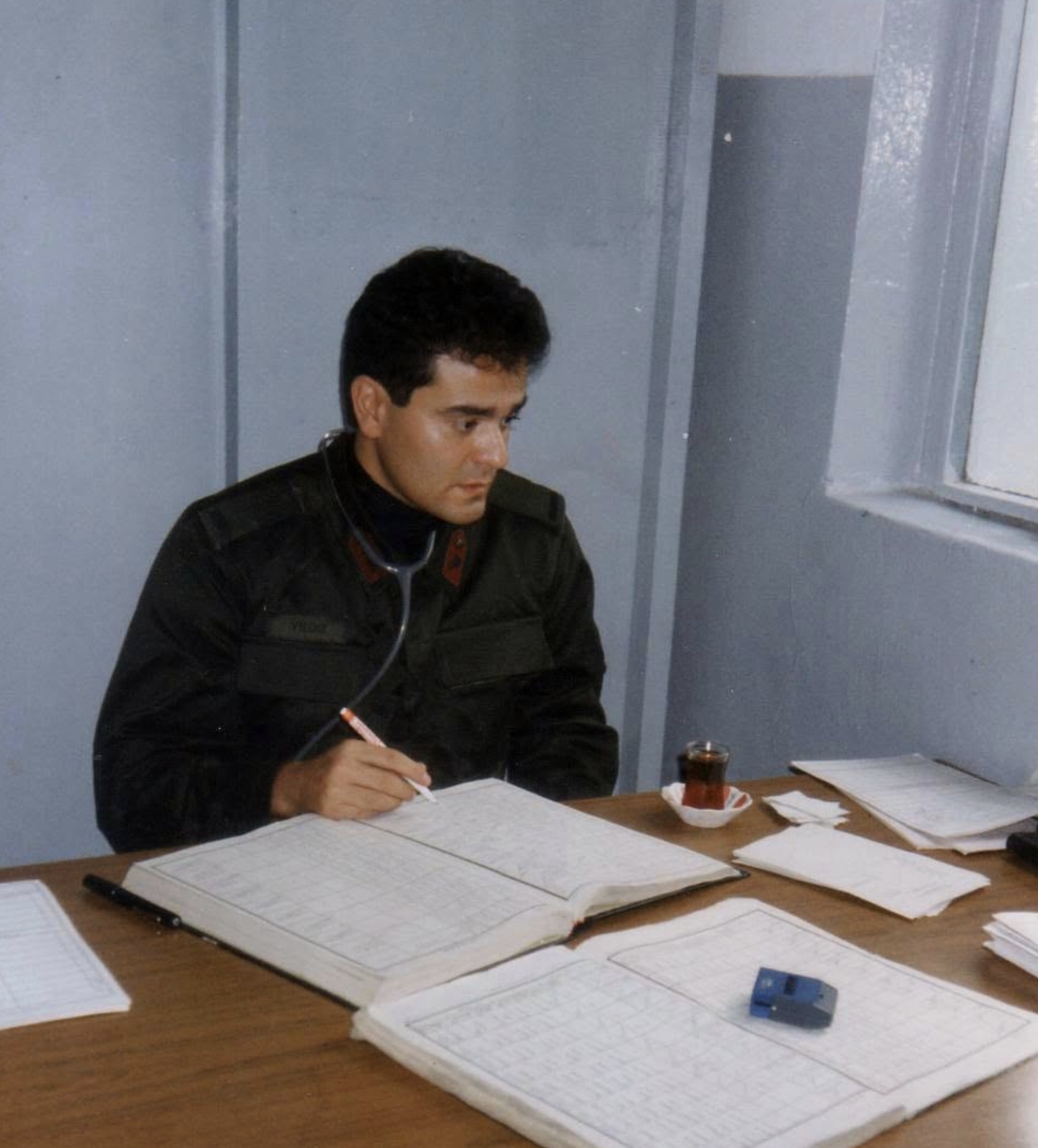
In fact, I had made that decision in my third year. But I was the only grandchild on my mother’s side; given the socioeconomic circumstances at the time, dropping out wasn’t an option. So I decided to get my diploma first, hand it over to my family, and then go my own way. The rupture you’re asking about was more theirs than mine; it was a painful process. The only time I practised medicine was during my military service, because I had to. Two obligations rolled into one.
Mine Gürevin: Even while studying medicine, you were involved in Music and theatre; in 1986, you even played with street musicians and Roma musicians on a journey from Bulgaria to Poland. Where did the Music Çağlayan heard on that journey, barely into his twenties, find its place in the musical world you would later build?
Çağlayan Yıldız: Yes, I was studying medicine while also getting involved in Music and theatre. Later, of course, that balance shifted at medicine’s expense.
In high school, we had imagined university life very differently. When we got there, we found very little in the way of culture, art, or philosophy; just dry “education”. So a group of like-minded friends got together and founded Ege University’s Music and theatre clubs. I remember spending the entire summer holiday after my first year on the paperwork. But our efforts paid off. I appreciate much more now just how open-minded the administrators were in those days.
The university decided to turn a large, unused lecture hall into a venue for culture and the arts. There, we set up two fully equipped Music rooms where students making all kinds of Music could rehearse. At the time, I was mainly trying to play blues and rock, but that was also where I took my first steps in free improvisation.
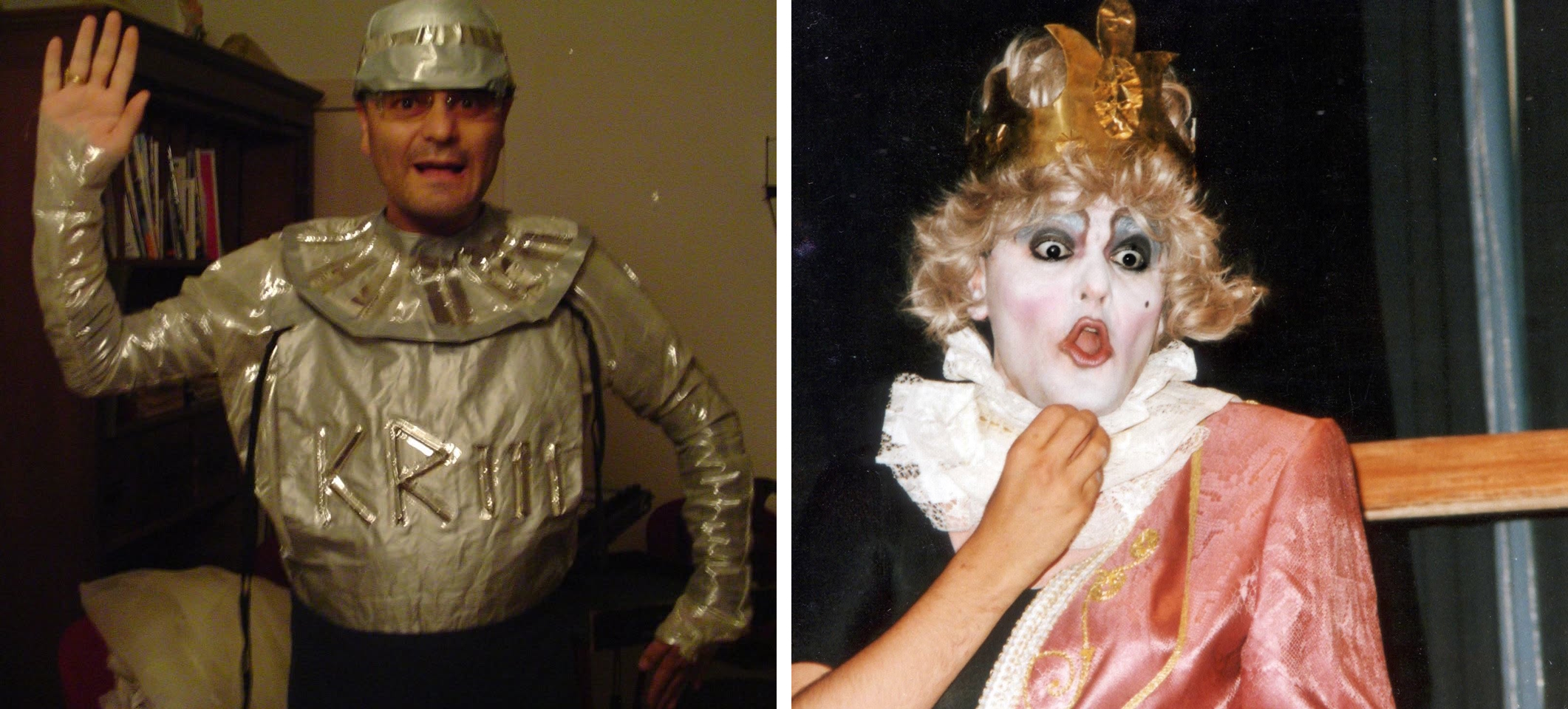
We had also set up a Music library, where all students could borrow books. Every Friday after classes, we screened concerts of different kinds from videotapes for more than two hundred people. In the eighties, being able to watch Pink Floyd, Led Zeppelin, Yes, or jazz and classical Music concerts on a big screen was a rare treat. The theatre club had a large stage, a costume room, and meeting rooms too. I was also acting as an amateur and composing Music for theatre.
That relationship with theatre and theatre Music, which began in those years, has resurfaced from time to time throughout my life: in 1997, I took part in Şener Şen and Uğur Yücel’s musical cabaret “Yarı Şaka Yarı Ciddi” [“Half Joking, Half Serious”], and in 2004, in “İnsanlarım” [“My People”], Genco Erkal’s adaptation of Nâzım Hikmet, on his tour of the Netherlands.
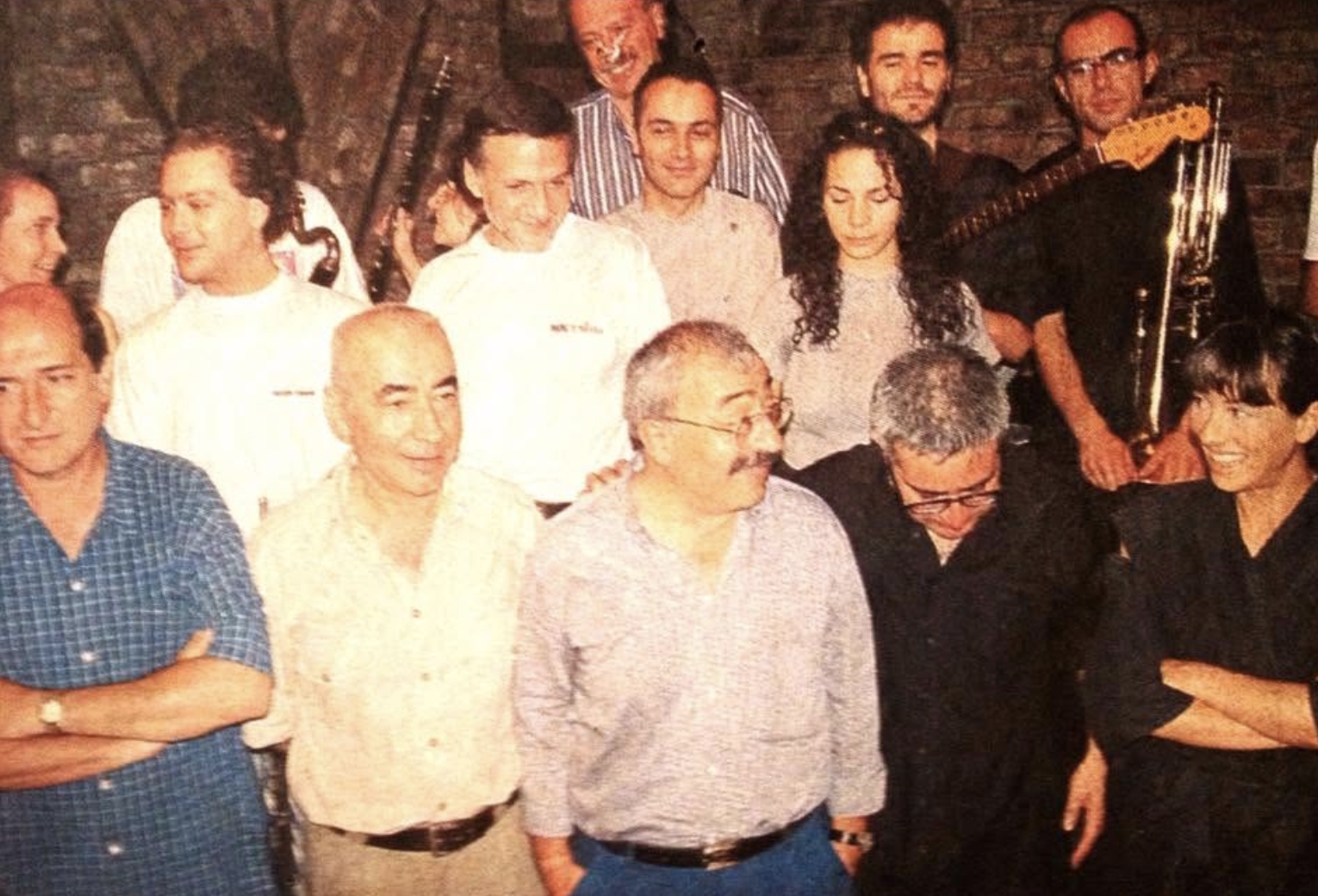
In fact, in the cabaret scene of Guy Ritchie’s “The Ministry of Ungentlemanly Warfare”, filmed in Antalya in 2023, I conducted the orchestra accompanying Eiza González as she sang “Mack the Knife”. So I thought: why die without appearing in a Hollywood film? 🙂
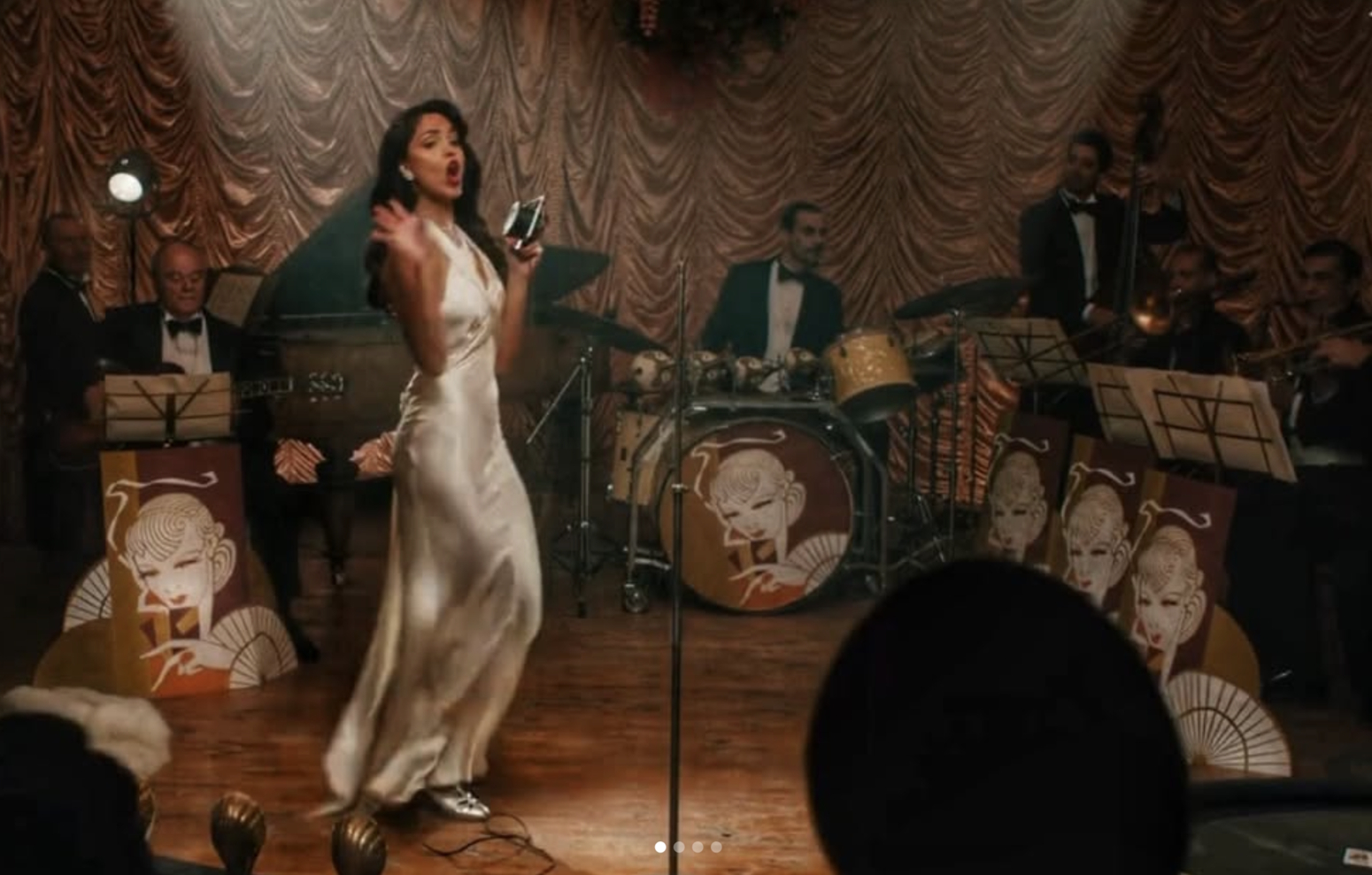
In the summer of 1986, I applied to an international exchange programme for medical students. An acceptance from Krakow in Poland enabled me to get visas for all the socialist-bloc countries. The Berlin Wall was still standing, and those countries were incredibly cheap. I spent the whole summer travelling through Bulgaria, Yugoslavia, Hungary, Czechoslovakia, and Poland, playing with every kind of musician whenever I had the chance. Folk, Gypsy jazz, blues, rock… Whatever was happening in the squares. Communicating through Music with people whose languages I couldn’t speak, trying to understand their feelings and different approaches by playing together, did me a world of good.
If there’s room in the article, and the reader has time, I can’t resist one more story. In Budapest, I met a saxophonist called Frank, and we played on the street together a few times. He told me he had sold everything he owned in America and set off on an overland trip around the world. After Hungary, he wanted to travel through Türkiye to India. I told him to call me if he passed through İzmir.
Sure enough, a few months later he called and stayed with me for a little while. He had brought the Real Book, one of the essential jazz repertoire books; I didn’t even know what it was. I immediately had it copied at a photocopy shop. Most of the photocopied Real Books in İzmir came from that one; in fact, they all have the same coffee stain on the first few pages. Frank also wrote out my very first Music theory lesson on a sheet of A4 paper: modes, harmonisation of the major scale, II–V–I… Until then, I had known absolutely nothing about any of it.
Then Frank and I decided to play on the street in İzmir too. It wasn’t a familiar sight in those days, so the municipal police promptly came and stopped us. But that brief moment was enough to make a connection. I remember Mahmut Yalay, who had just returned from Berklee, coming over and saying, “Look how far Türkiye has come—they’re playing jazz on the streets now. I’m a double bassist myself.”
We immediately spoke to a bar or two we knew and started playing as a trio. After Frank left, we carried on with vibraphonist Tevfik Akbaşlı and trumpeter/pianist Yavuz Darıdere. So if you ask where the Music I heard on that journey ended up: right at the beginning. Perhaps none of this would have happened without that meeting in Budapest and our urge to play on the streets.
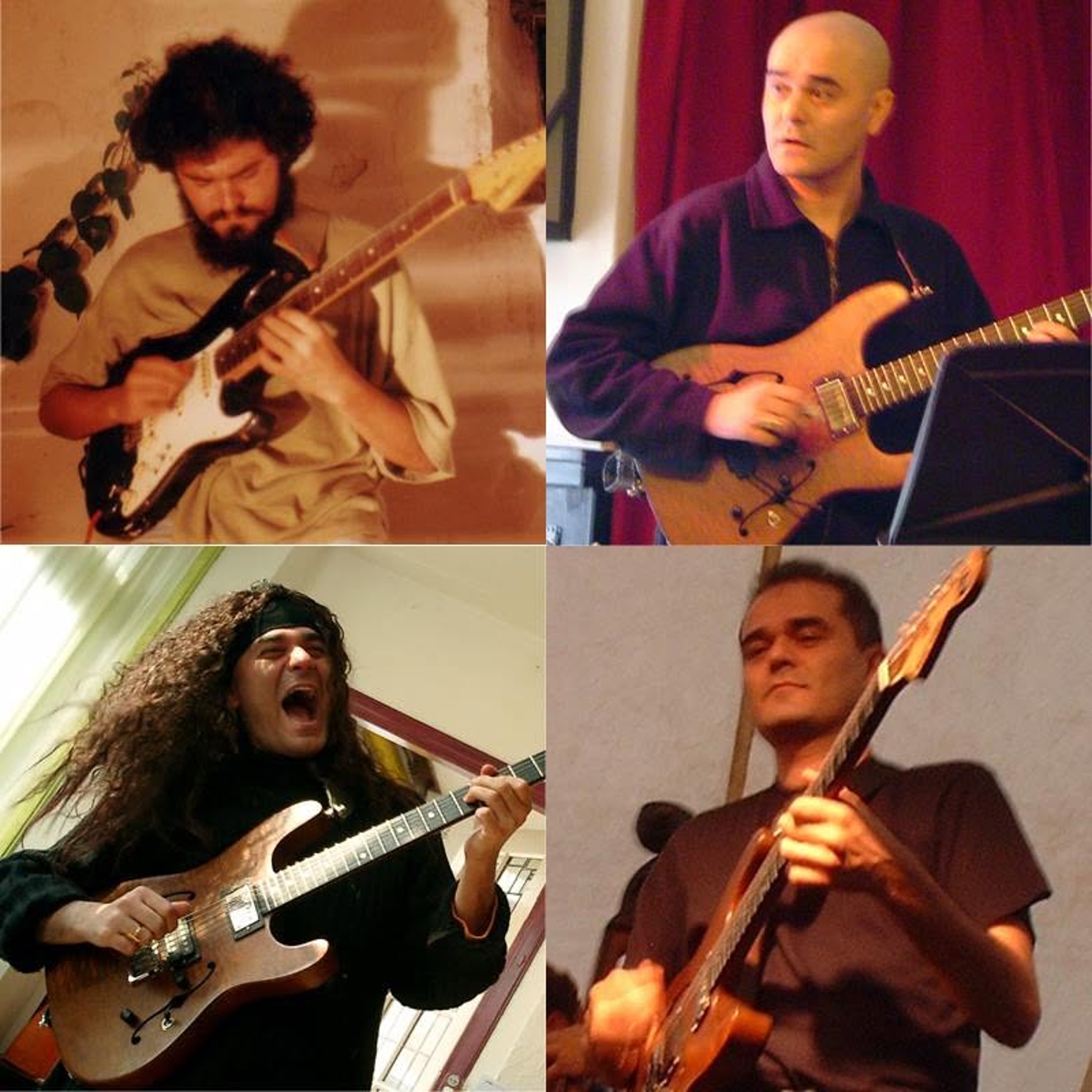
Mine Gürevin: Then comes Bilkent, where you enter a circle that includes Tuna Ötenel, Sarp Maden, Yahya Dai, Sibel Köse, and Kamil Erdem. Looking back at those years, when jazz in Türkiye was a much smaller world than it is today, what was that scene’s greatest advantage, and its greatest difficulty?
Çağlayan Yıldız: I don’t think jazz in Türkiye was a much smaller world then than it is today. Above all, we were living in a much slower world. We had time for art and for people. We weren’t bombarded with information the way we are now. Sources were hard to find, but we valued what we found and spent a long time with it; we had the peace of mind to absorb it and discover what we ourselves had to say. People had “desert islands” where they could develop their own musical personalities. There were also far more places to play. I remember playing jazz at least five or six days a week with Yahya Dai and Mahmut Yalay, who was my flatmate then; some days, we even did three gigs. And money really did go further in those days.
Bilkent’s library partly made up for the shortage of written material: students and teachers would write down the books they wanted, and the library would order them from abroad. A large part of my Music library today consists of photocopies we made in those years.
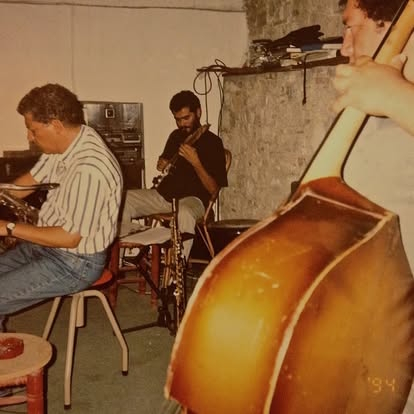
The biggest difficulty was the school’s approach to education. It felt as though the school had opened in a hurry, without enough planning. Although it was a jazz department, we had most of our classes with Janusz Szprot, the department’s only jazz teacher. Since we had no teachers for our instruments, we studied guitar with the classical guitar teacher, solfège from Lavignac 1A—the most elementary level—with the classical solfège teacher, and Bach in our secondary piano lessons. In short, it was called a jazz department, but it had little to do with jazz or with the level we were aiming for. Despite all the school’s facilities and financial resources, our attempts to bring musicians of the calibre of Aydın Esen and Neşet Ruacan into the department also came to nothing. When we couldn’t see anything changing or developing, Budiilizm stepped in again, and we left.
Mine Gürevin: There are also your journeys to India. You’ve said your relationship with Eastern philosophy has touched your Music too. Did India teach you more about Music, or about your relationship with your mind while making Music?
Çağlayan Yıldız: Whatever I learn about Music teaches me something about life; whatever I learn about life teaches me something about Music. I don’t think there can be a better mirror of the spirit and mind than Music and the other arts that require us to be in the flow.
That’s why I can’t separate the two things in your question. Understanding that the mind is an “organ”, just like my hand or arm, changed the way I approached it when making Music too.
I had begun taking an interest in Eastern philosophy in the early nineties. I was spending my summers in Kaş then, and after leaving Bilkent I moved there full-time. I read a great deal, meditated, and tried to understand myself. In 1993, I decided to take about a year away from Music and look at its place in my life from the outside. Where was the ego in Music, and Music in my ego? What was inspiration? What was flow? How much of Music’s place in my life had to do with a spiritual search, and how much with social life? I wanted to understand these things.
That period did me a lot of good. When I picked up the guitar again about a year later, I wanted a fresh start. I abandoned the standard tuning that makes the guitar asymmetrical and switched to the completely symmetrical all-fourths tuning. I don’t know where the inspiration came from. I couldn’t research things online as we can today, and I didn’t know of any guitarist who used that tuning. But I suddenly found that many things had become easier, and a great weight had lifted from me. At the time, I had no idea it would become the subject of my EMMA master’s thesis at Utrecht University’s KMT in 2006.
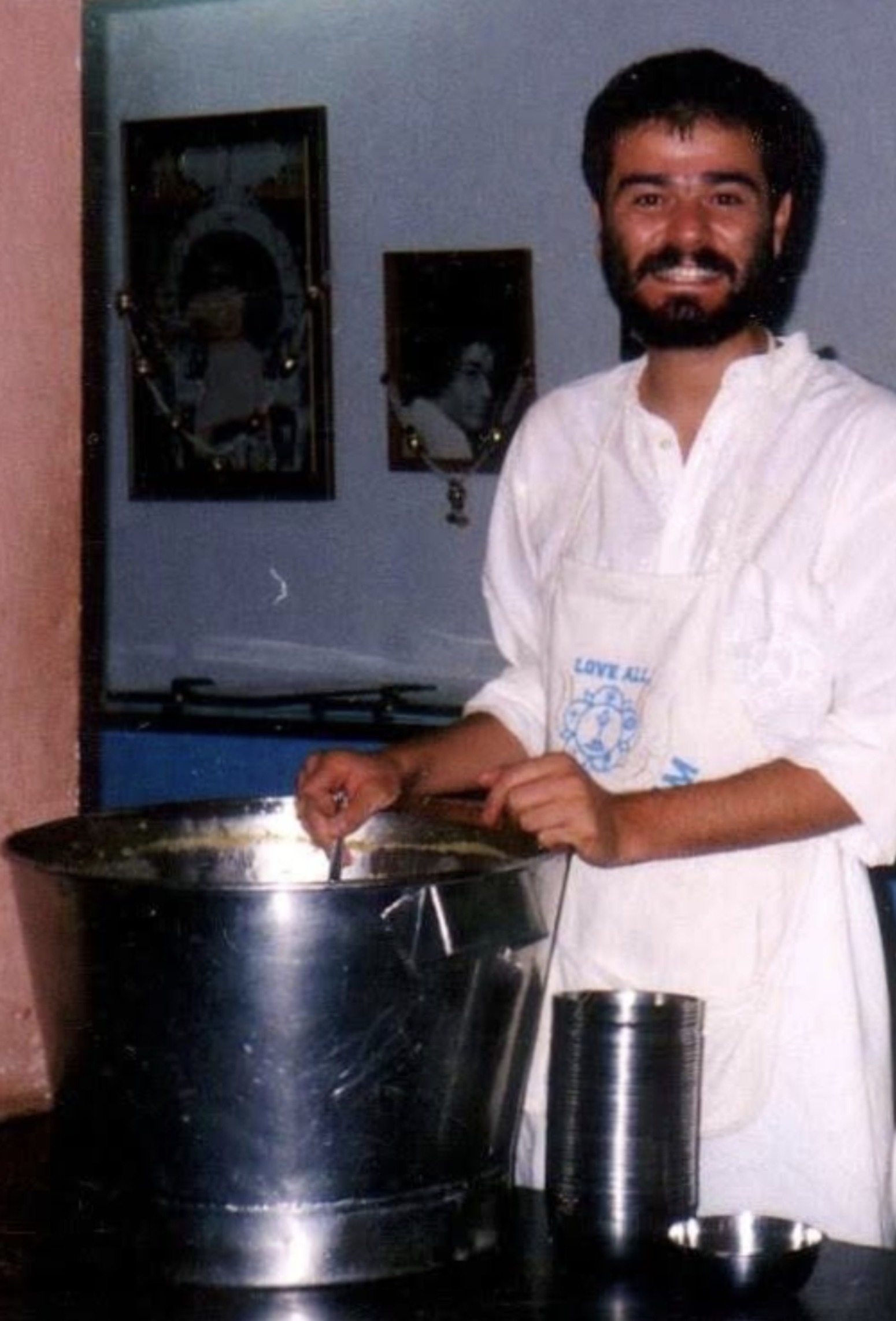
Later, I made two overland journeys to India, each lasting about six months. Those journeys changed me considerably, both spiritually and musically. But I don’t want to turn that into an “I went East and discovered the secret of life and Music” story. If I had found the secret, you’d be the first person I told in this interview. 🙂 I was lucky enough to meet some wonderful musicians and take short introductory courses in Indian Music. I attended concerts that lasted for hours; those concerts taught me the real meaning of Music, of being in the flow, of states of trance. I studied with the sitar player Shubhendra Rao, a direct pupil of Ravi Shankar, had the chance to meet the great master L. Subramaniam, and later made two albums with the singer Ajnish Rai.
In later years, Advaita—non-duality—and post-enlightenment philosophy came to hold an important place in my life. Ramana Maharishi, Nisargadatta Maharaj, and Steven Harrison, in particular, influenced me deeply.
Mine Gürevin: Jazz guitar, bass, composition, and arranging in Amsterdam; classical composition in Utrecht; electronic Music in Rotterdam and Utrecht… You have a fairly systematic Western Music education. Yet you’ve devoted a significant part of your life to improvisation. Beyond a certain point, does all that theory and knowledge increase a musician’s freedom, or build new walls inside the mind that have to be overcome?
Çağlayan Yıldız: It looks systematic from the outside, of course. In fact, I owe all that to Budiilizm too. The guitar department at Amsterdam Conservatory was bebop through and through; the bass department leaned towards pop-jazz and funk. I just couldn’t fit into those moulds. So I transferred to jazz composition and arranging, where I had the chance to study with forward-looking composers such as Misha Mengelberg and Theo Loevendie.
Later, while completing my composition studies with Henk Alkema at Utrecht Conservatory, I took electronic Music lessons with René Uijlenhoet at Rotterdam Conservatory. I then completed master’s studies both in Utrecht Conservatory’s composition department and at Utrecht University’s KMT, ending up with two master’s degrees. If I count primary school, I spent 28 years in education. And that is as much as they managed to educate me. The most important thing I learned about education was how it should NOT be done. I suspect that when my grandmother named me Çağlayan—“waterfall”—she was thinking, “Water flows and finds its own way.” 🙂
One reason I love improvisation so much is that, as we create in the moment, we can establish a direct relationship as equals. We can also see very clearly how much we have actually learned. Is what we know on paper still with us when we play?
I don’t see an inherent contradiction between education and freedom. Even so, we should be able to question every framework we learn. If we can hear only what we know by name and pattern, knowledge can limit us. If it helps us hear more and play what we want to say, it sets us free.
There is no art without craft, but there can be craft without art. We see theory as part of that craft. Notation, chord names, harmonic theory, even the tuning systems of instruments are tools we use to approach Music. They are maps. But we can confuse the map with the territory. For example, we may think we can’t play a rhythm when we see it on paper, even though we can play it easily when we hear it.
My hocam—my teacher—Tamer Dövücü helped clarify a distinction for me: knowing, doing, and being. Being able to describe an interval intellectually doesn’t mean we can hear and play it. Being able to hear and play it doesn’t mean we can use it meaningfully when making Music, turn it into art. What we know has to settle into our ears, our bodies, our expression. Only then can we “be” as we play.
This was always what I emphasised in my articles for Jazz, Gitar, and Drum&Bass magazines too.
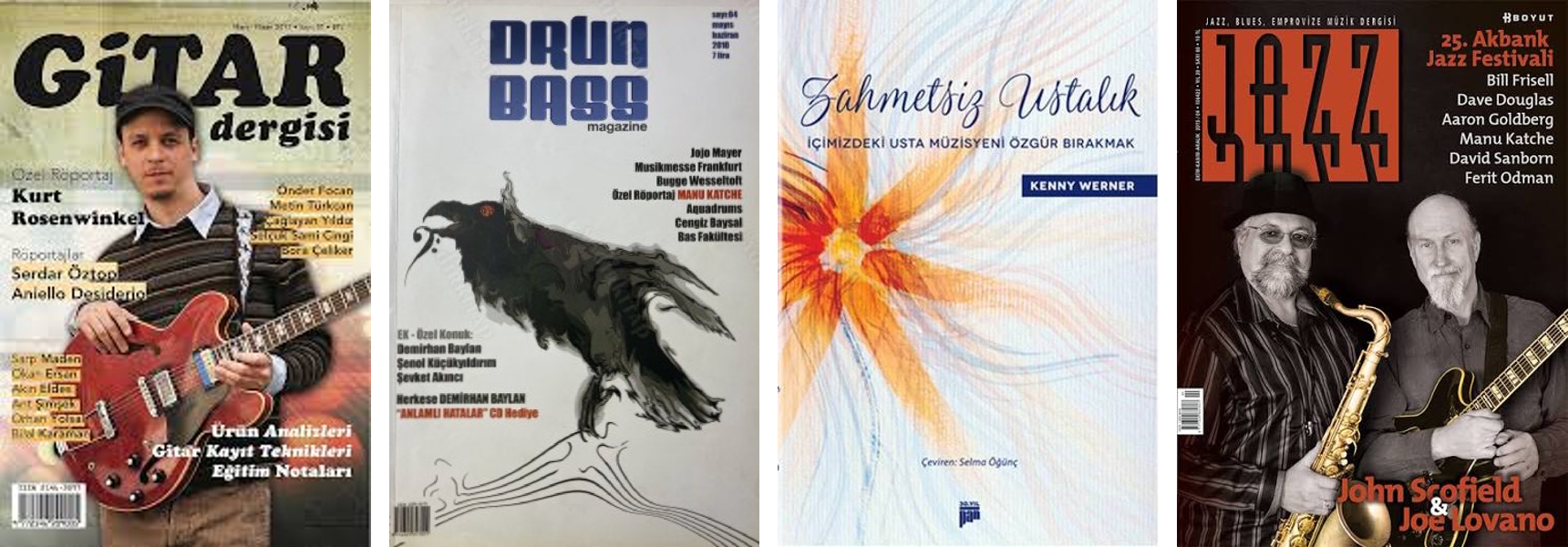
I edited the Turkish translation of Kenny Werner’s “Effortless Mastery” (Turkish edition: “Zahmetsiz Ustalık”) and helped get it published. Werner says the highest state a musician can reach is one in which the self is absent. Theory is a ladder on the way to that state; once we’ve climbed it, we shouldn’t carry it on our backs. When practising, we need to examine, understand, and repeat. But when we make Music together, if our minds are constantly monitoring, naming, and judging, we can struggle to hear what is happening in the moment and connect directly to the common source.
We’re not going to abandon theory; we just need to absorb it well enough that we don’t have to keep proving to ourselves that we know it. Then, instead of becoming fixated on what we ourselves are going to play, we can hear and love what is actually being played in that moment.
Mine Gürevin: During the ODD-TETT period, you worked on “designed free improvisation”. Two almost contradictory words seem to meet here: “design” and “freedom”. For you, is there such a thing as truly free improvisation? Can a musician completely escape their past, education, and habits and play freely?
Çağlayan Yıldız: When we pick up our instruments, our past, education, and habits come with us. I don’t know whether we can leave our minds somewhere and start playing. But we can become aware of our habits; then what we know stops being the only thing we have to do. Sometimes, setting no limits at all leads us back to the few gestures we know best, rather than setting us free.
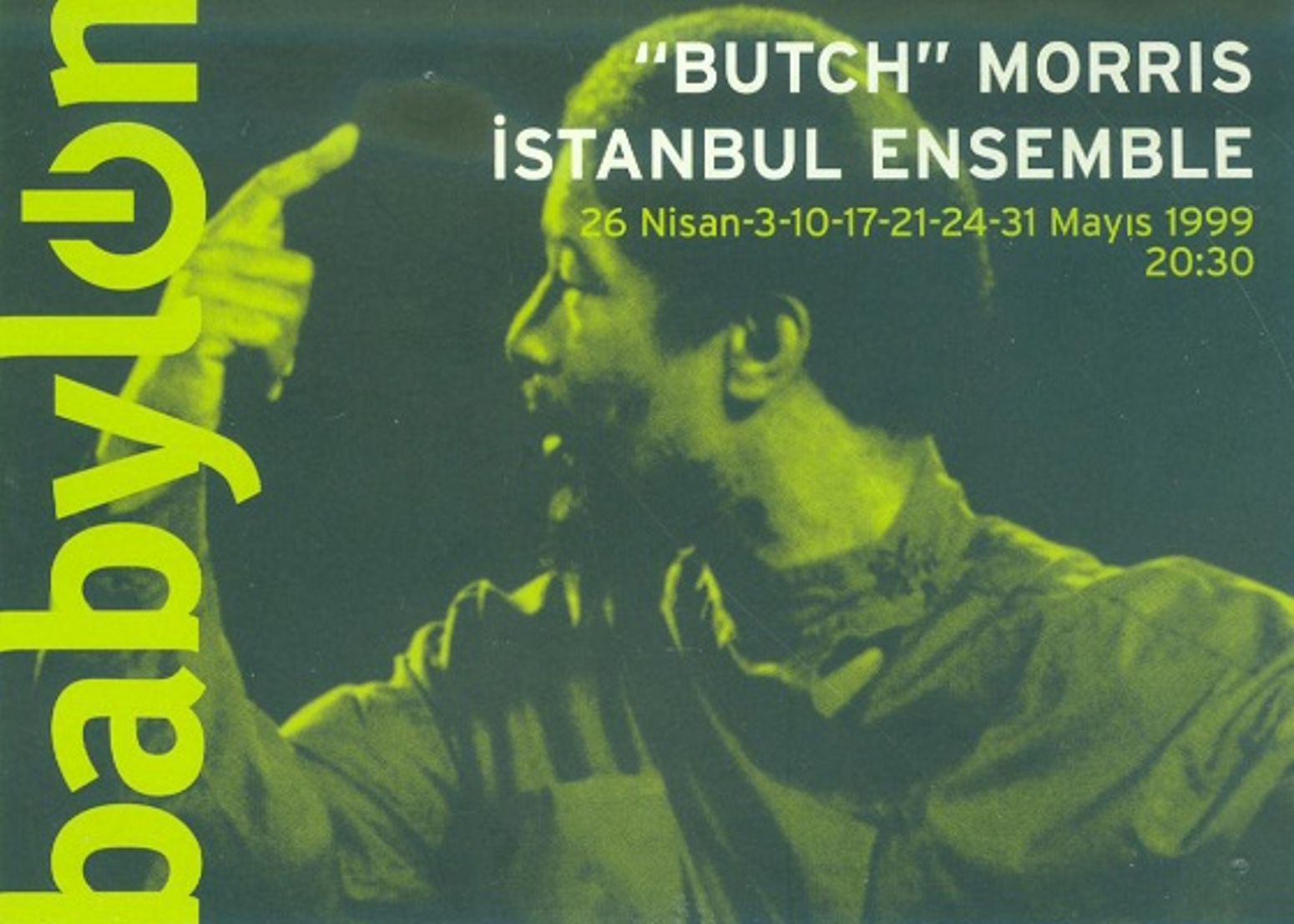
That search began for me in the eighties. Playing in Butch Morris’s ensemble in the late nineties taught me a great deal. Being able to change the course of an improvisation through signals helped me think about composition and improvisation together. Then I tried to develop this to suit my own needs. I wanted to turn all the tools a composer uses into written signs and build a system in which improvisations within certain limits could be blended with fully notated passages.
The “designed free improvisation” work with ODD-TETT grew out of that. Using writing and graphic signs, I developed Signs for Improvisation. I was very interested in how what is written and what is created in the moment could feed one another.
Even then, I wanted to make software in which instructions could be created in the moment and shared interactively, rather than using hand signals or signs printed on paper. Since I wasn’t a programmer, that idea sat in a drawer for years. These days, I’m working on turning Signs for Improvisation into just such an app. We’ll see when I can finish and release it.
We don’t have to write every note. We can also compose through the way an idea develops, where the density changes, and how the musicians respond to one another. The people playing decide what happens within that framework in the moment.
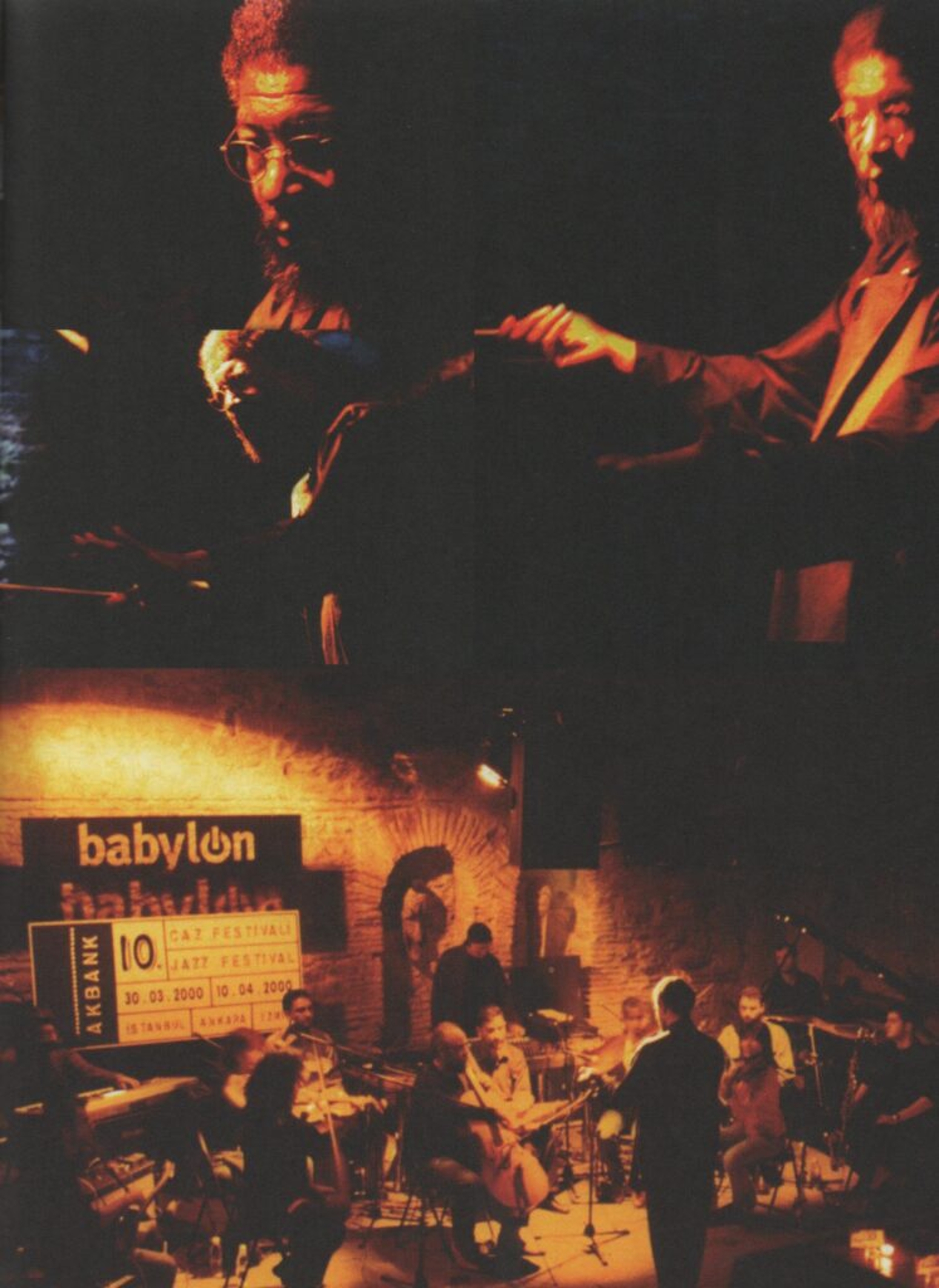
For example, telling someone who has never improvised, perhaps even feels intimidated by it, “Go on, play whatever you feel” can sometimes leave them panicking, with no idea what to do, rather than liberating them. But if we can communicate the instruction “Use these three notes; play very softly, leave long gaps between them, and decide for yourself when and in what order to play them” through signs, without speaking, they now know where to begin. We can tell someone else, “Choose a single note; after playing it, wait for the sound to fade completely”, and another person, “Listen to the musician next to you; when they stop, give a short response.” That way, no one has to build all the Music alone; everyone makes their own decisions and contributes something. When these instructions come together, the same “composition” emerges differently every time.
The same signs also let us play with people from very different cultures and traditions. Those who read notation and those who don’t, traditionalists and innovators entirely unfamiliar with one another’s Music, can talk to each other through these signs. When we notate everything, the Music often can’t “take wing off the page”. Rather than listening and taking part from within, we try to follow with our eyes and carry out our duties. When we leave things entirely free, other difficulties arise: faced with unfamiliar sounds and musical behaviours, we can quickly put on our armour and retreat to the comfort of what we know. With flexible tasks, everyone can contribute what they know. Instead of taking refuge in our differences, we begin doing something together with them.
Nor does everyone have to be at the same technical level. Children, conservatory students, experienced musicians, or people of any age with very little experience of an instrument can take part in the same Music with an instruction that suits them. One person’s contribution might be to sound a single note at the right moment; another’s might be to build something more complex around it. Being able to do little technically doesn’t mean contributing little to the Music. As long as we hear one another and the place of what we’re doing within the whole. I look for freedom within limits too.
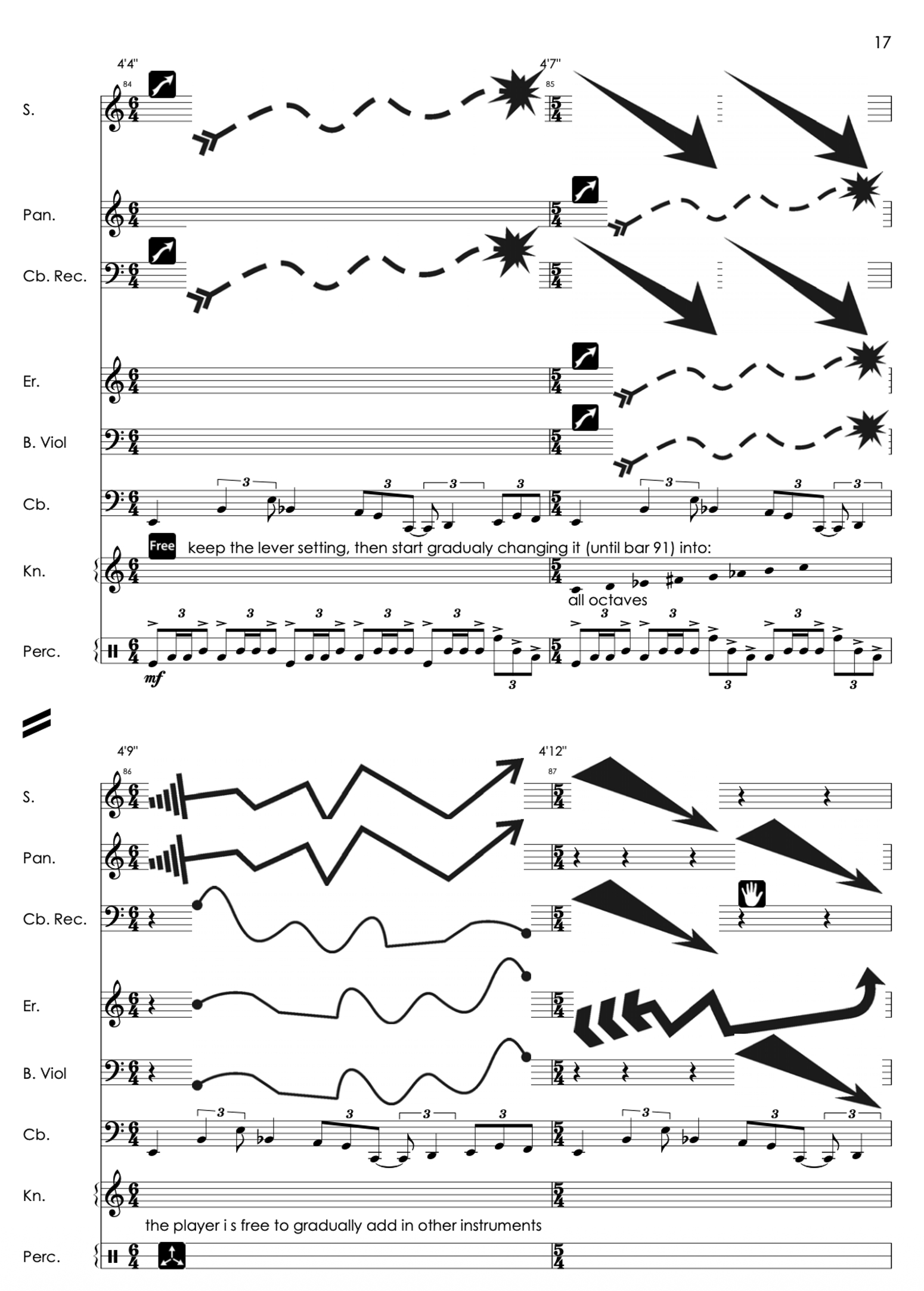
Mine Gürevin: Your relationship with instruments doesn’t fit a single identity either: guitar, fretless guitar, bass, fretless bass… When a musician moves to another instrument, does it change only their sound, or their way of thinking too? Are Çağlayan the guitarist and Çağlayan the bassist the same musician?
The same musician, of course; I don’t become someone else just because the instrument in my hands has changed. But I don’t have to behave in the same way either. Moving from one instrument to another can change more than the tone colour: where we stand within the Music, what we listen to most closely, and how we talk to the other musicians can change too.
I have a stock joke I often make about bass: “Man proposes, the bassist disposes.” Changing a note’s placement, duration, or weight on the bass can take what the whole group is doing somewhere else. It can even completely change the meaning of a chord played by a chordal instrument. There’s no escaping it; the bass is the foundation of the sound. If the ground shifts, everything on top of it shifts too. What the bass is doing often becomes apparent only when it stops. And yet we don’t have the luxury of stopping whenever we feel like it.
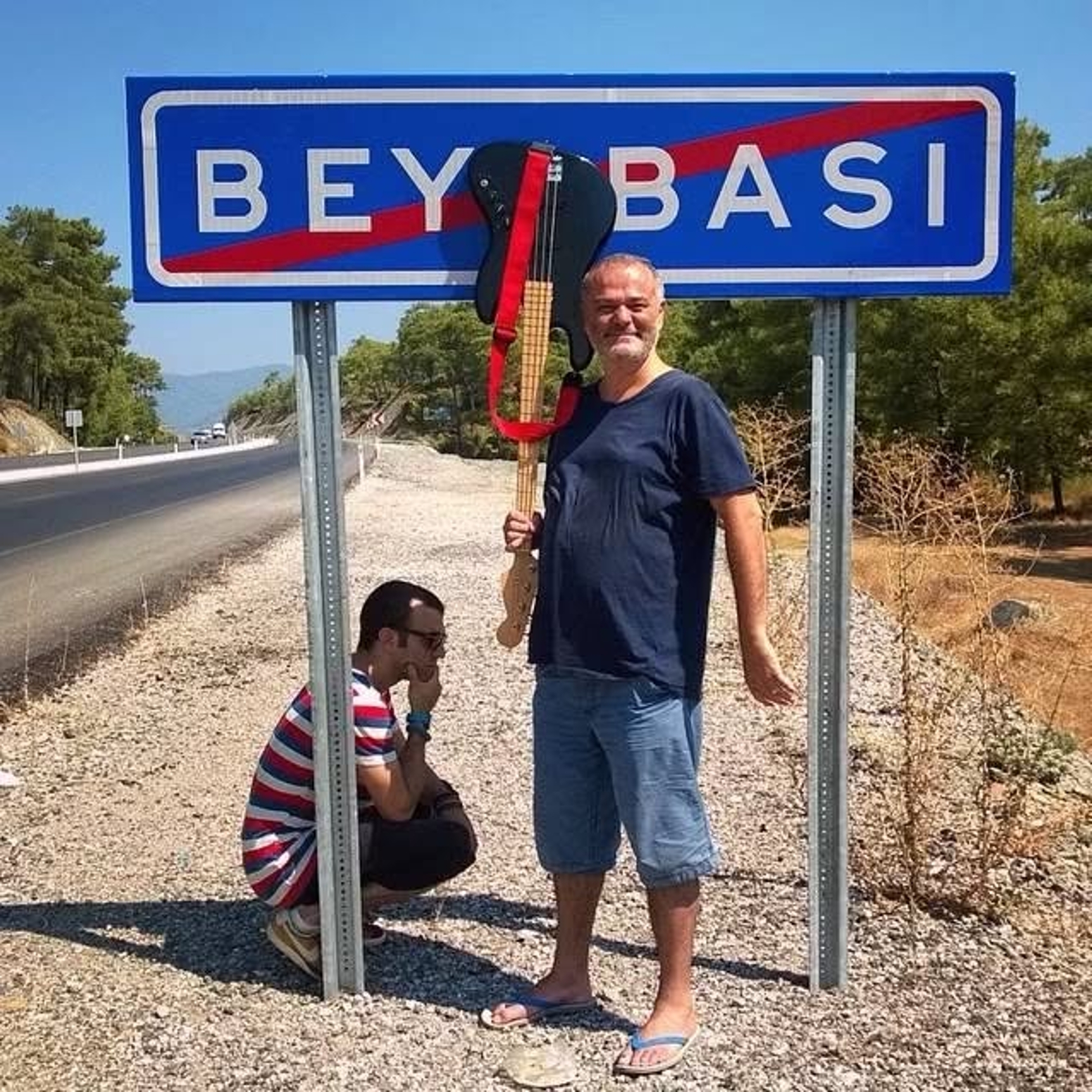
On guitar, we play in a range that overlaps with the speaking frequencies of the human voice. So I feel the listener’s attention falls more directly on us, that more is expected of us: harmony, counterpoint, a broad palette of timbres, virtuosity…
On a fretless instrument, as we find a note’s position, we are also creating its sound. The journey between two notes is audible too; how we approach a note, stay with it, and leave it is all part of the expression.
But changing instruments doesn’t automatically change how we think. We can carry gestures memorised on guitar over to bass, or our approach to fretted playing over to a fretless instrument. We need to listen to what the new instrument allows, where it struggles, and respond accordingly. Whatever instrument we play, the real issue is hearing our place within the whole.
The things I’m curious about, my desire to communicate with the people I play with, what I hope for from Music, and the state of trance I want to enter remain the same. When the instrument changes, the responses I can give and the places I can take the Music change. What I learn on one helps me on the other; that’s the lovely part. Something I learn on bass may lead me to play less on guitar; a relationship I hear on guitar may change how I choose a single note on bass.
I wrote an article called “Alet Edevat Hakkında” [“On Tools and Gear”] that also covers this subject. Anyone interested can read it at this link.
Mine Gürevin: On one side, there is the Music you’ve made with Oğuz Büyükberber, Sarp Maden, Volkan Öktem, Tamer Temel, and Tolga Tüzün; on the other, Barış Manço’s Mançoloji, Grup Gündoğarken, Şevval Sam, and a Tarkan tour. For years, Türkiye drew very sharp identities around being a “jazz musician”, a “rock musician”, a “pop musician”. Did you never take those boundaries very seriously?
Çağlayan Yıldız: I took the differences between kinds of Music seriously, but I never saw much sense in turning those rigid identities into boundaries between people. When we say, “I’m a jazz musician, a rock musician, a pop musician”, we may be describing what we love most, which Music we feel a little more at home in. But when that also starts determining what we won’t listen to or whom we won’t play with, I find it limiting and pointless. If I question the moulds I can’t fit into elsewhere in life, why should I behave differently in Music?
Every kind of Music calls for its own kind of attention. Playing within a song isn’t the same as free improvisation. In one, we need to hear the space opened up by the words, the melody, the singer’s breath; in the other, we may be deciding together, in the moment, where the Music will go. We can’t play an idea everywhere just because we love it. It’s like conversation: we don’t tell our favourite joke at every dinner table either. First, we need to hear in our heads how it will sound in that setting.https://www.youtube.com/embed/EPHdNIdLZqM?feature=oembed
We learn something different in every setting. How to say something powerful with very little material, yet be only as assertive as needed; how to contribute to a song without disrupting its flow; how to hear our place in a large ensemble, or stretch a genre’s standard structures without knowing what will happen…
Nor is depth determined by the name of the genre. Very complex Music can be played out of habit; something very simple can contain great depth and subtlety. We don’t have to display our entire musical vocabulary in every setting. Sometimes, what we know helps us hear what we shouldn’t play, or add the little piece we feel is missing.
My roles change in the work I do with the people you mentioned. What shouldn’t change, whatever we play, are our instincts for being in the moment and in the flow, and our love for and faith in the sound we make. I think a musician’s personality should be something larger than doing the same thing everywhere. If we can keep our curiosity and really listen to the Music we’re in, these encounters can help us grow.https://www.youtube.com/embed/xbC-h_TFR-A?feature=oembed
Mine Gürevin: I’d like to talk separately about Trio Mrio. In the trio you formed with Sarp Maden and Volkan Öktem, you’re both bassist and composer. There’s very little room to hide in a trio; everyone is exposed. Looking back after all these years, what did Trio Mrio teach you about being a musician?
Here’s how I would describe Trio Mrio: three people hold hands and jump off a cliff into the sea. We don’t know who will let go of whom, or who will catch whom at the last moment. An incredibly exciting fall, full of life; then we land safely in the water. Trio Mrio let me experience that in Music.https://open.spotify.com/embed/artist/09rVJhrJnsG6awlr840CyI?utm_source=generator&si=ef26be8afc164cf9
Sarp and I write the compositions in Trio Mrio. But we don’t actually write anything specifically for the group. We both write a great deal, and each of us selects pieces from our own pool of compositions that we think might suit the group and brings them in. Although the compositions are solid structures that can stand on their own on paper, for Trio Mrio they are “starting points”—the edge of the cliff.
Our first album came out on Kalan in 1998, and the second on Pasaj in 2013. Fifteen years between the two. It’s interesting to hear recordings by the same group so far apart: you can hear how we’ve changed along with our Music, and where we haven’t changed at all. At this rate, the third album will arrive in 2028, who knows?
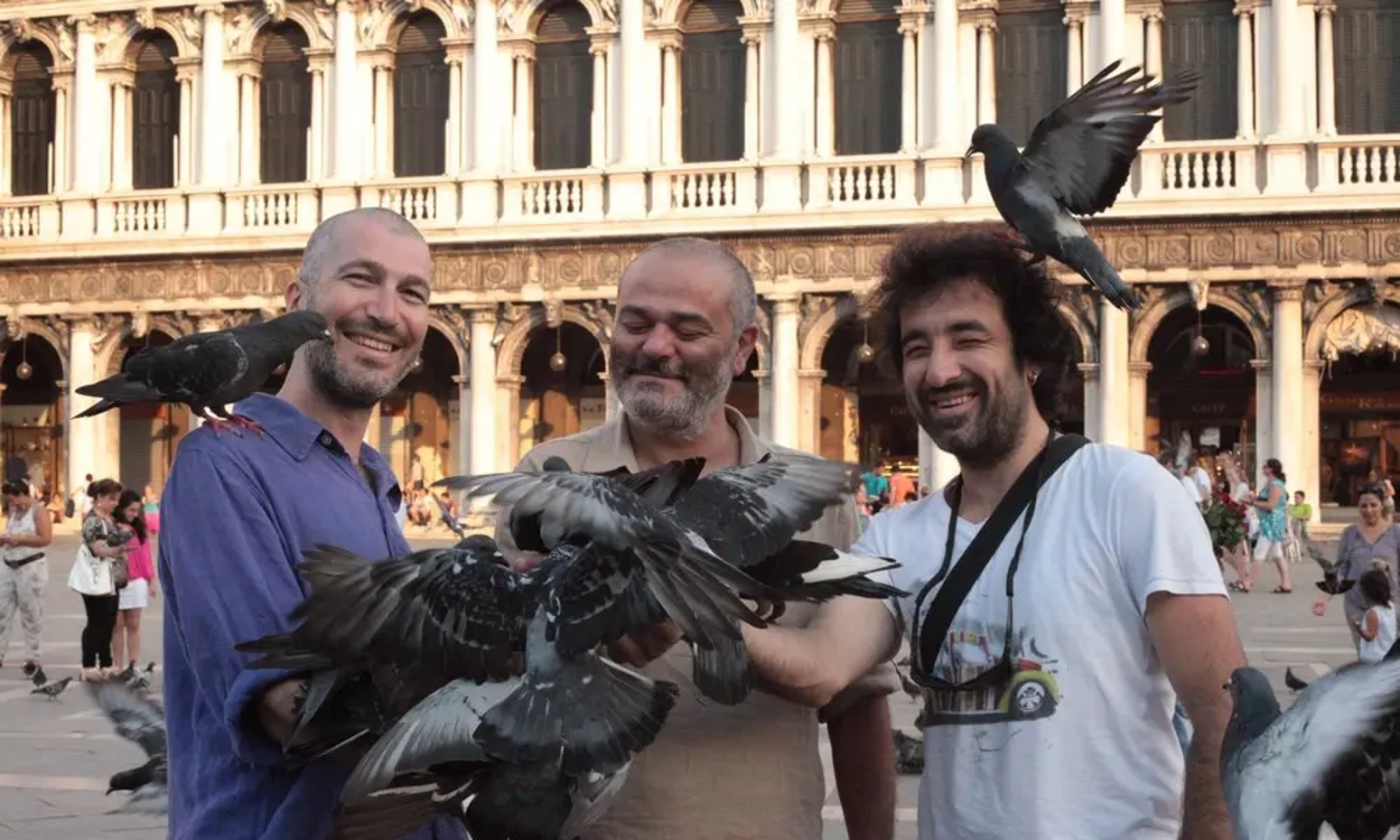
Mine Gürevin: Your musical relationship with Oğuz Büyükberber spans many years, most recently resurfacing with HUE. Does being able to keep meeting up with a musician over the years require more than shared musical taste? What keeps the musical conversation between you and Oğuz alive?
Çağlayan Yıldız: If I’m to describe my relationship with Oğuz, first and foremost it’s Friendship. Something that needs thought, effort, and appreciation. We change as life flows over us; the question is how to move through those changes while preserving our core values. In a true friendship, you’re always with the same person, and yet each time with someone a little different. There’s the ease of trusting each other on one side, the excitement of change on the other. It’s like that when we talk, and when we play. I can’t really separate the two anyway.https://open.spotify.com/embed/album/2FMXlMB688DBsTa4bgdTby?utm_source=generator&si=71697db91b5648b8
That’s how it is with Oğuz. But to keep meeting up with a musician over the years, you may not need more than “shared musical taste”. If I like how a musician plays with sounds, and they like how I play with sounds, that may be quite enough. We might not know each other at all, or know anything about how each other’s lives unfold. Even so, playing together can do us both good. Isn’t that precisely what makes Music important—its ability to bring us together beyond the language and concepts of everyday life?
For example, last year bassist Toros Yıldırım and drummer Görkem Efe came to my studio so that we could play as a trio for the first time. Three of my students happened to be there listening too. After we’d played a little, I realised something special was happening—at least for me. My recording setup wasn’t ready; I made a stereo recording with a simple Zoom audio recorder. We later released it as Puja Jams (2025 08 04).https://open.spotify.com/embed/album/165DYXrNYzVg9EVFOqZ16r?utm_source=generator&si=691db7407951471b
Similarly, Serhan Erkol and I got together and played a completely improvised concert, bringing in both our instruments and our electronic setups. We released that as Circuit Blenders.https://open.spotify.com/embed/album/2IdgxMtLVu8sWgXTSOsdvJ?utm_source=generator&si=f20b646ea3b8442e
To be honest, I’m not particularly concerned with how this Music sounds to the listener; those were special moments for us, and we wanted to share them. If listeners also enjoy the way we play with sounds, all the better. I don’t know when we’ll get together again as that trio or duo, but I’ll happily press record again—this time before we start playing. Because we enjoyed playing together.
Isn’t Music really that simple?
Mine Gürevin: There was a period when you left İstanbul and settled in Çukurbağ village in Kaş; Antalya came after that. Did moving away from the heart of the big city change your relationship with Music? Once you left İstanbul, was there more that you lost, or more that you could hear for the first time?
I think the sources on the Kaş period are a little muddled. I first went to Kaş in 1988. In the summer of 1990, I worked there with double bassist Mahmut Yalay. Guitarist Kaan Korad and vocalist Zeyno Bostan later joined us. From the summer of 1991 onwards, I began living there full-time.
Kaş was a very different place then. It hadn’t become popular yet, it was hard to reach, a true haven for slow tourism. Both the people who chose to live there and the tourists who came had a completely different outlook. In the early nineties, we could play regular duo gigs every night with Oğuz Büyükberber or Sarp Maden in perfectly ordinary bars. It sounds strange to say it now. Imagine: there were customers who would sit and have a drink while listening to that Music, and venue owners who would book that Music. I come across photographs of us at Sun Cafe, which later became Echo Bar, setting up an Atari 1040ST—the Music computer of the day—and a Roland JD-800 onstage and playing regular gigs as an electronic trio with saxophone and vocals. It feels like another world.
Alongside being a musician, I also worked professionally as a diver during the day.

We could make a living playing the Music we loved. We could live on little and make our summer earnings last through the winter. All the remaining time was ours; we could give it to Music and the other things we loved. During that peaceful period, I had plenty of time to look both into Music and into myself. As I mentioned earlier, that was when I switched to all-fourths tuning, wrote quite a few pieces, and spent long hours practising.
Now and then, I’d play concerts in İstanbul and come back. Over my life, I set up and dismantled a life in İstanbul five times, while keeping my home in Kaş. I could never love anything about İstanbul apart from its Music scene and opportunities. It has always felt like a “hamster wheel” to me. You have to battle traffic for hours to reach a small patch of nature. I realised I didn’t have to live there just to play with the people I liked playing with; I could manage it from a distance by travelling back and forth.
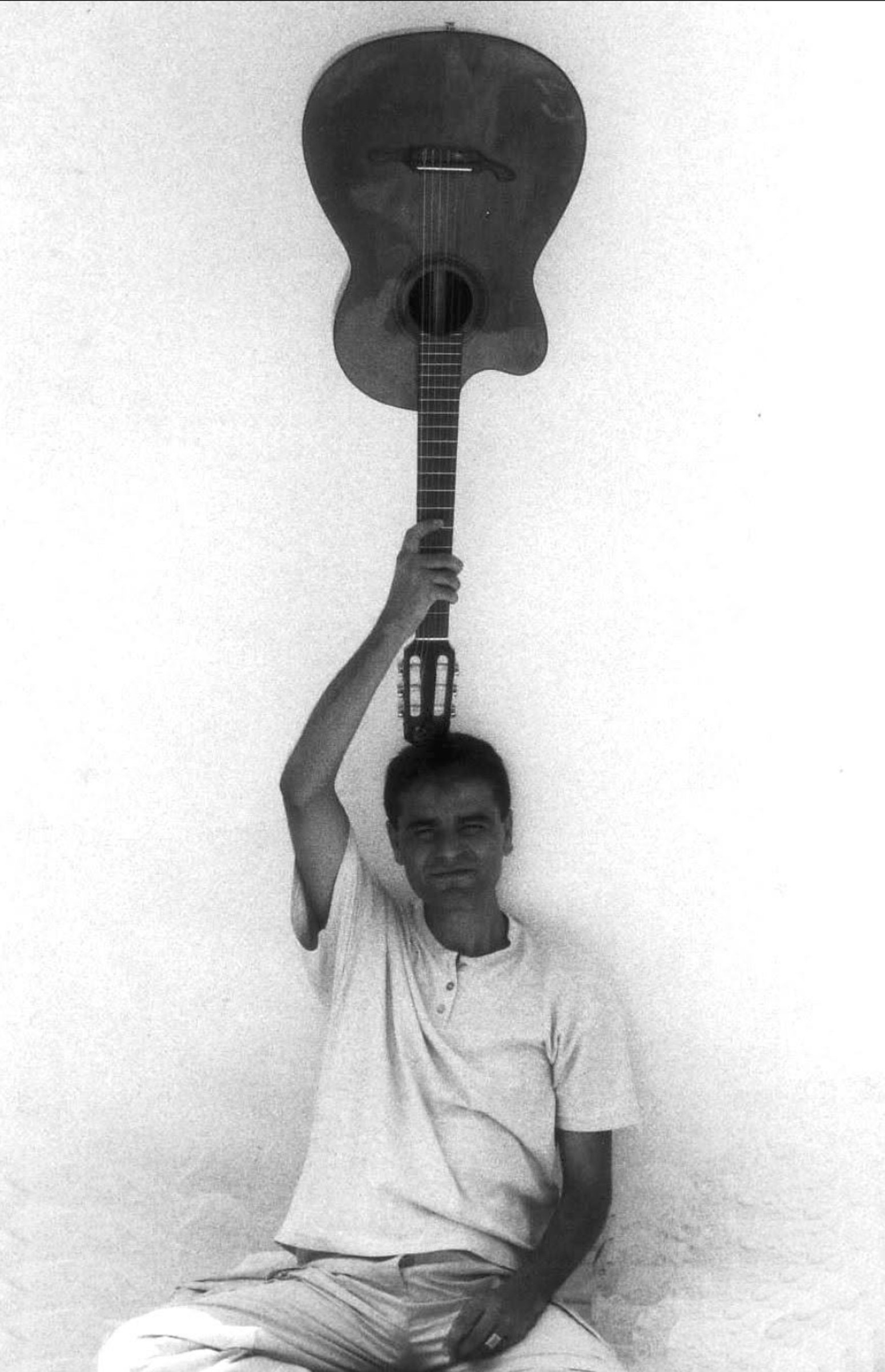
Then I went to Amsterdam in 2000, and in 2003 I gave up my home in Kaş. I returned from Amsterdam in 2006 and settled in Antalya. I spent 2015–2017 in Kaş again. A series of tree portraits I photographed became an exhibition in Kaş and İstanbul in 2016: “Onlar Bize Hep Bakıyor, Biz Onlara Bakmasak da” [“They Are Always Looking at Us, Even When We Don’t Look at Them”]… For two years, I was Music director of Düşler Akademisi; I gave concerts with my group Groove Guru’s Klan (GGK) and with jazz musicians passing through Kaş.
Then the changes in Kaş, whose very different incarnations I had known in the nineties, began to hurt a little, and I withdrew almost entirely. In the end, Kaş went on the “bu diil” list too.
Mine Gürevin: Let’s turn to Puja. Puja Music Productions, which you founded in 2017, now brings recording, production, education, concerts, software, and various Music projects together in one place. When you founded Puja, were you really thinking of a company, or a laboratory where you could put everything you’d learned about Music over the years?
Puja—Sanskrit पूजा, pūjā—means showing respect, honouring, and worship; it also carries the meaning of an offering. In ancient texts, it can also mean welcoming a guest with respect. It’s a word that suits our bond with Music beautifully. When we make Music, we give our time, our attention, our labour, something of ourselves. Listening to the person we play with, being there for someone who is learning, developing and sharing an idea—these are all offerings too. What makes something an offering is the care and respect with which we give it. Our puja is an offering to Music: through the Music within us, we honour the Music that is greater than us; we offer the Music we make to the Music within everyone.
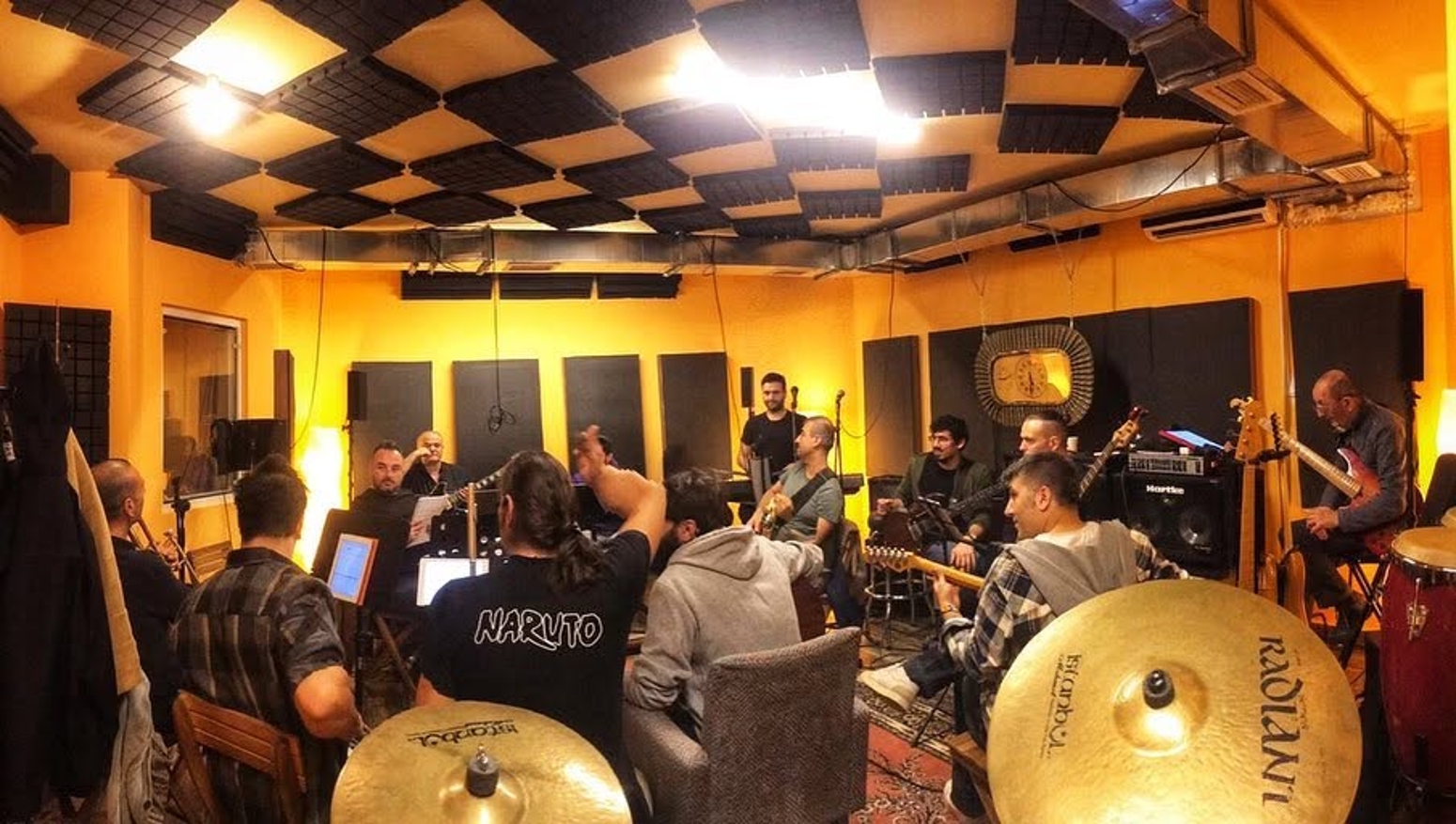
In 2017, we took over Karakedi Stüdyo in Antalya, and my spouse, Sinem Yıldız, and I put a great deal of work into turning it into Puja Studio & Musicafé. There was a rehearsal and recording studio downstairs, and a café, a tiny stage, and a teaching room upstairs. Turgay Demiryürek, the founder of Mitanni, later joined us, making us stronger still.
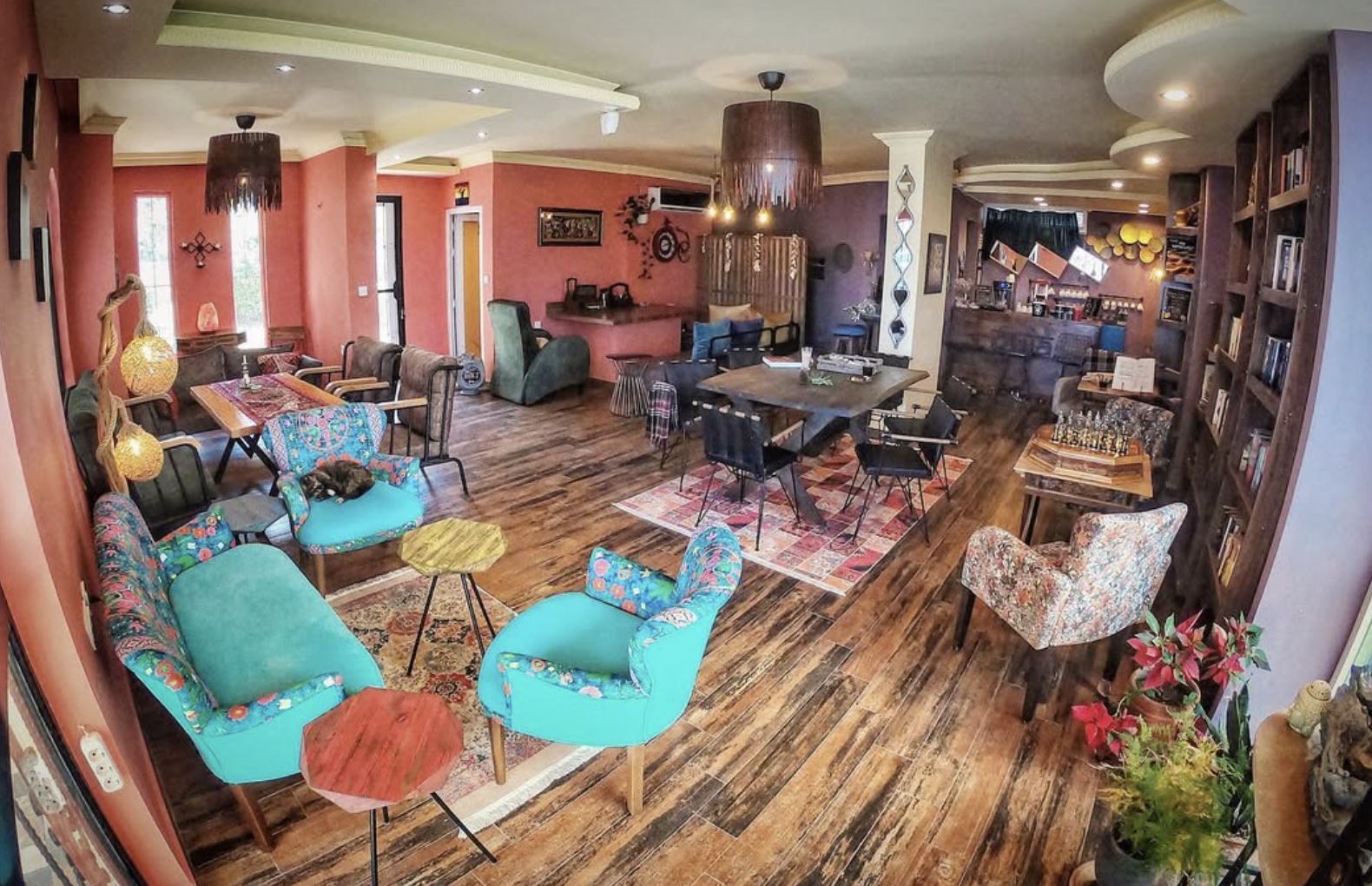
Around the same time, we began working with Akra Hotels and formed Akra Jazz Band. I became Music director of 251 Soul, which opened in 2018, while it was still being planned. I even named it after the II–V–I cadence, the signature of jazz harmony. We played regularly with musicians living in Antalya and met different guests from out of town every week. We gave the opening and closing concerts of Akra Jazz Festivali with Akra Jazz Band and guests. We brought jam sessions—the workshop of jazz—to the festival. Later, I formed Akra Big Band; in 2019, we played the closing concert of Akra Jazz Festivali with Dee Dee Bridgewater. By June 2024, when my relationship with 251 Soul ended, Puja Music had put on more than 1,200 individual concerts; Akra Jazz Band had accompanied around 60 guest singers. Think of everything behind the scenes too: repertoire, rehearsals, technical preparation, organisation… Every week, for years.
That lasted until the sentence “You no longer offer us any marginal utility” ran headlong into Budiilizm. Still, we built a rare model that brought “Mind, Labour, Heart” together with Capital, and kept it going for seven years; I’m grateful for that much.https://www.youtube.com/embed/QFPYZEIeYnI?feature=oembed
Meanwhile, Puja Studio & Musicafé unfortunately became a “Covid casualty” and had to close. So we packed up our things and built a better Music production studio at home.
Your laboratory comparison fits too, actually. A difficulty a student is having, or a need we hear while playing together, can be the starting point for a teaching tool or a piece of software. Today, I’m trying to turn those ideas into apps and web platforms with the help of AI. Sometimes we just get together to play, and an album comes out of it, as with Puja Jams and Circuit Blenders.
A company has responsibilities, of course; all this has to work economically too. What I want is for us and others to be able to make Music, learn, and teach. If we call it a laboratory, we can say it’s one with its door open to everyone.
I’ll repeat it without shame: our puja is an offering to Music: through the Music within us, we honour the Music that is greater than us; we offer the Music we make to the Music within everyone.
Mine Gürevin: One of the things that interests me most about Puja is the way it brings Music education and technology together. You develop apps such as String Logic, AllGoRhythmics, MathRonome, and SLoop. At what point does a musician start saying, “There needs to be an app for this—I might as well sit down and make it myself”? Is there a kinship in your mind between writing code and composing?
Çağlayan Yıldız: For years, I’ve kept coming up against the same question, both in my own practice and in lessons: does the difficulty here really come from Music itself, or from the systems we use to explain, write, and teach it? I’m trying to cut down on those detours. I think about how, if I came into the world another two hundred times and became a musician in every one of them, I would want to learn Music from the very beginning, how I could understand and explore the depths of the universe of Music more easily.
Even most of the best Music books ever written prefer giving you a fish every day to teaching you how to fish. For example, I can reduce some highly regarded jazz education books, running to a hundred-odd pages, to an algorithm in a single paragraph. Because all those pages of exercises are different applications of the same idea. What I want to teach is less the exercise itself than the algorithm that produces it and the infinite possibilities that can grow from it. By algorithm here, I don’t mean computer code, but how a musical idea is constructed and how it can turn into other ideas.
For example, in rhythm, instead of trying to reach the whole by deciphering the symbols one by one, we can first feel a whole and divide it into two, three, or five. If we grasp how a pattern is formed, what emerges when we shift its accents, change its groupings, or move it to a different subdivision of time, we can generate our own patterns too. In the app, I want us to be able to change these things and immediately hear and try them. Rather than consuming ready-made exercises, people should be able to ask their own questions, generate studies to suit their needs, and discover things that haven’t occurred to me either.
I’m trying to bring these things together in Puja Academy: the book I’m writing, the apps, interactive web tools, Music history atlases, work on playing together. In MathRonome and AllGoRhythmics, I work on time and rhythm; in String Logic and Keyboard Logic, on relationships between pitches, harmony, and melody. In what I make for children too, I want them to learn through experimenting, without killing their curiosity.
Everyone needs something different, so I don’t want to line everyone up in the same “beginner, intermediate, advanced” sequence. Let’s be able to find what we need and where we need it, whether we follow a path or explore freely.
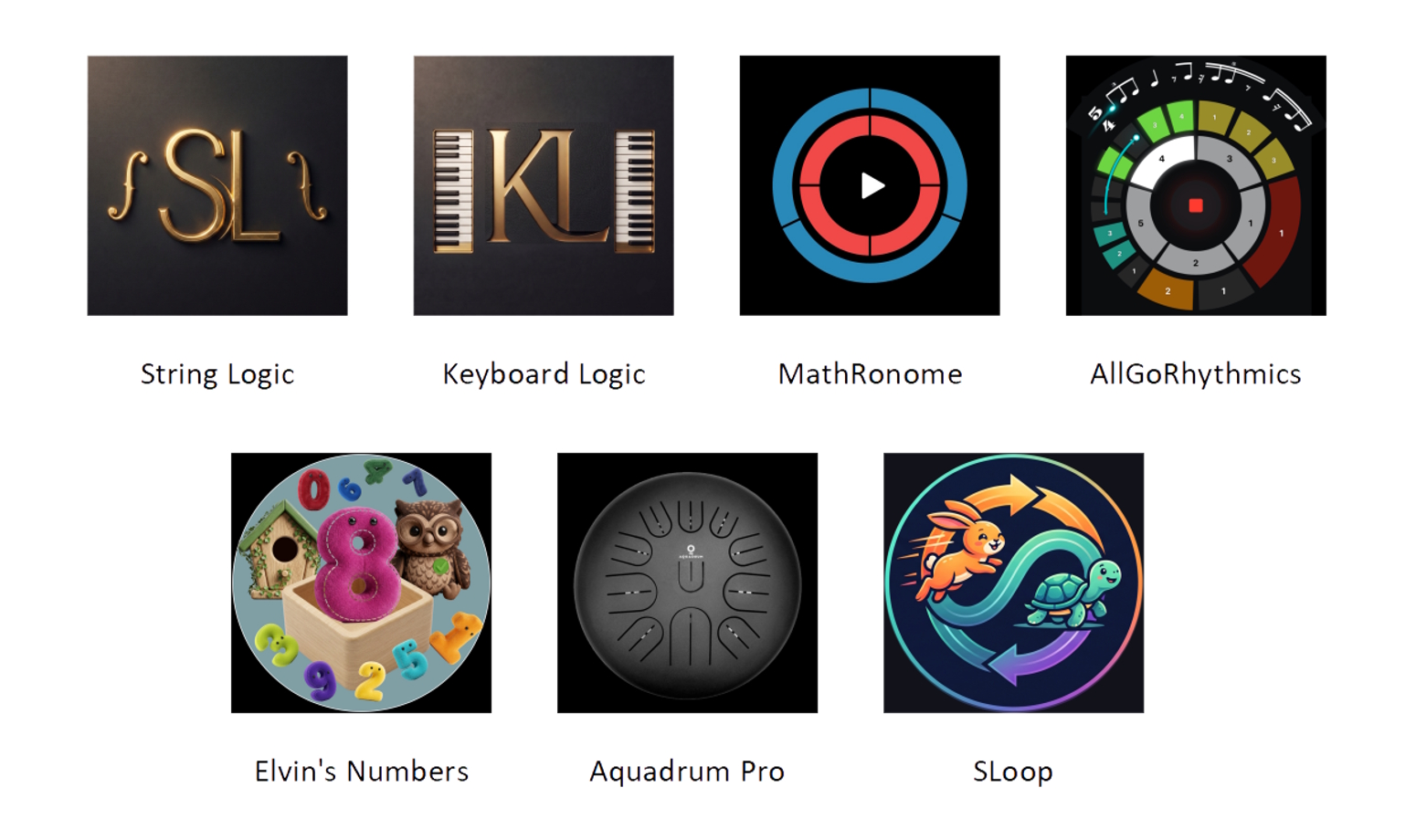
But the “sit down and write the code myself” part of your question needs correcting: I can’t write a single line of code. In 2021–2022, I worked as a Music education consultant at a software company; that ran into Budiilizm too. What I can now get AI to do with a single paragraph, I couldn’t get twenty people with higher IQs than mine to do in a week. Perhaps that was down to my own ineptitude, or perhaps to the prejudice that Music theory is as difficult as quantum physics. Defne Cemgil and I worked together for about a year on my first Music app, MathRonome; Defne developed the audio engine. Around the time MathRonome was completed, AI had reached the level of the best programmer I could hope to work with. So I decided to carry on with only my AIsistan—my AI assistant.
Today, I describe what I want to teach, the musical thinking, and how the tool should behave. Then I try it out and look for what’s wrong or missing. AI writes the code, but the musical responsibility is mine: I put it to the test with my ears, my instrument, and my experience.
I do see a kinship with composing, especially with open-form compositions, or sitting down before a blank sheet of paper with a pencil and an open mind. In both, we think about what will relate to what, the limits, and who will make which decisions. We can determine every detail or leave some decisions to the player. Signs for Improvisation is a project where those two fields meet directly. But in a teaching tool, we have to distinguish between what we deliberately leave open and what we must teach correctly. Freedom left to the performer mustn’t become an excuse for a tool’s shortcomings, lack of method, or mistakes.
When we open the app, let’s focus on Music; let’s know what we’re practising and why. What we do there should be useful when we make Music too. I want the things I share in lessons and when playing together to help someone else find their own Music, even when I’m not in the room.
I’m sixty. If I can build these systems as I imagine them and leave them as a legacy, I’ll be happy. I believe mastery can only be earned by nurturing students who surpass you. Thankfully, I have students I’ve worked with directly who have surpassed me. What if there were also students I’d never met, but whose lives and Music I’d touched, who surpassed me?
App Store
■ MathRonome
■ AllGoRhythmics
■ Aquadrum Pro
■ Elvin’s Numbers
■ SLoop — Slow Down & Loop
Gumroad
■ SLoop Full Edition (macOS)
■ MathRonome for Ableton Live
■ Isorhythm for Ableton Live
Mine Gürevin: Behind String Logic lies almost twenty years of thought, reaching back to your 2006 study “Standard Guitar Tuning: A Historical Mistake?” (“Standart Gitar Akordu: Tarihsel Bir Hata mı?”). To look at an instrument used for hundreds of years, like the guitar, and say, “Something here may have been set up wrong”—isn’t that also a challenge to received wisdom? What exactly is your problem with standard guitar tuning?
Before devising new exercises to overcome the difficulties created by standard tuning, I asked whether we could remove the difficulty itself. In E–A–D–G–B–E tuning, neighbouring strings are a perfect fourth apart—five semitones—except for G and B, which are a major third apart—four semitones. While all the neighbours speak in fourths, G and B speak to each other in thirds. Because of that single exception, when we move the same musical relationship to a different group of strings, we have to change the fingering. The interval is the same, the chord is the same, the musical idea is the same; but the shape our hands have to learn is different. Then, when we combine intervals to build chords, arpeggios, and scales, that little irregularity spreads through them all. In my thesis, I described it as a snowball effect.
In the nineties, after the break from Music I mentioned earlier, I raised the B and high E strings by a semitone and switched to E–A–D–G–C–F. With a perfect fourth between every pair of neighbouring strings, the fretboard became a consistent geometry. When I moved an interval or chord shape learned in one place to other strings, I could preserve the same relationship. First, I experienced that ease through playing. In the 2006 study, I compared the same musical material in the two tunings and counted how many different shapes were needed. For example, among the three-note chord voicings I compared, all-fourths tuning required 12 shapes, while standard tuning required 36. That doesn’t mean everyone learns three times faster; but we do have to memorise three times as many shapes for the same material.
Recently, I came across an engineering approach of Musk’s that felt very familiar: first question the requirements, remove the unnecessary part or process, then simplify and improve what remains; acceleration and automation come later. What I did with tuning is similar: before looking for a way to memorise the G–B exception faster, I ask whether we really need that exception. Once it goes, a whole lot of explanation and practice needed to deal with it becomes unnecessary too.
What I gain is better synchronisation between what I hear, what I think, and what I do with my hands. Since we aren’t starting from scratch at every new step, we can also give more attention to what we want to say, to phrasing, timbre, and the people we play with.
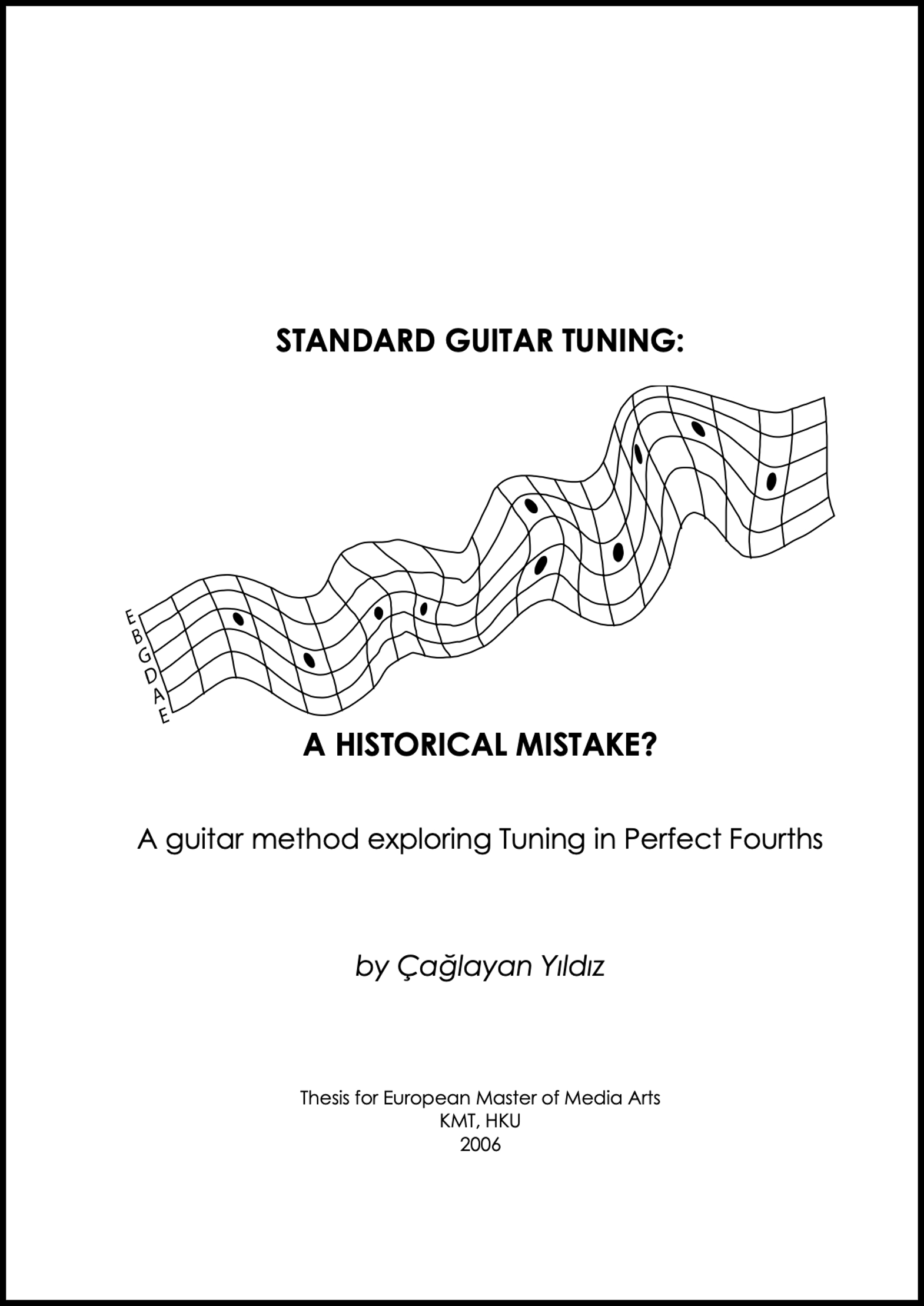
Of course, when removing something, we also have to look at what we lose. Standard tuning makes certain open-string chords and familiar barre shapes easier. There is a large repertoire written for it; when we move to all-fourths, we have to adapt that repertoire to new fingerings. I discussed these things in the thesis too. Every musician can decide according to the Music they want to make. I made this choice so that I could think about harmony, melody, and improvisation with the same logic everywhere on the fretboard.
That is also what the question mark in the thesis title is about: is a system that met the needs of one era still the most suitable system for the Music we want to make today? I don’t want the word “standard” to stop us asking that question. I also look at what the piano keyboard, notation, and note names make easier or harder. That’s why I’m developing String Logic and Puja Academy: let’s put our effort into Music rather than those detours.
Mine Gürevin: And now there’s Jazz History Atlas. You visualise jazz history from 1889 to the present through musicians, groups, instruments, countries, periods, and their relationships. What was the first spark for the idea? Did you one day think, “This is how we need to see jazz history”, or did the project grow out of another need?
Çağlayan Yıldız: I knew the educational work I had in mind would be incomplete without Music history. I’m as curious about the conditions in which Music emerged, whose contributions helped it develop, and how it was influenced by other Music as I am about how it is constructed. But what got me started on the Atlas was something rather more everyday.
A friend shared an Excel file in a WhatsApp group, listing a hundred-odd jazz musicians, their instruments, and their birth and death dates. My friend was amazed and excited to have had AI prepare it. I thought, “If people are surprised by this, I wonder what would happen if I made what I have in mind?” I even told the group that, if I knew anything at all about AI, I thought a single prompt could take us far beyond this. That was how it began. Between you and me, that “single prompt” eventually turned into five atlases. 🙂
I made the first concrete attempt in September 2026, with forty musicians from the bebop era. I wanted to see how jazz styles branched over time, and who played with whom, on the same map. Then the scope grew: different periods, styles, musicians, and ensembles came in. Once albums and playing relationships were added, we could follow a name to other people and recordings.
I didn’t want to confine a musician to a single period or genre. Looking at someone like Miles Davis, we’re already moving through several transformations. When a new style appears, the old one doesn’t retire; people keep playing and developing it too. I want us to be able to see these things side by side. We also brought historical, social, and economic conditions into the Atlas. Under what circumstances did people come together, what migrations and encounters took place, and how did these find their way into the Music?
Accuracy matters too. That was also why I took a half-joking, half-serious look at misinformation in “Pardon Ama…” [“Excuse Me, But…”], a series of friendly sparring matches with jazz social media. We need to know what every line we draw in the Atlas is saying. There is a lot of work between getting a result from AI and turning it into a reliable educational tool.
Someone opening the Atlas doesn’t have to follow a single historical narrative chosen by me. I want them to be able to start with a musician they love, an instrument, a country, or a period, and follow their own curiosity. To notice a familiar musician’s connection to another scene, or stumble on a recording they’ve never heard of.
For every album listed under a musician, there are also search links to Apple Music, Spotify, and YouTube Music. So, while exploring who they played with and the periods they passed through, we can move straight to listening to their Music. Instead of reading and moving on, we listen. Once we know about a connection, we can start hearing a musician we’d never noticed before on that same recording.
This approach hasn’t remained confined to jazz either. Atlases for rock, soul, blues, and Western classical Music are now ready too, awaiting release. While examining genres separately, I don’t want to lose sight of how they nourish one another. I want it to be an educational tool anyone can use free of charge. Anyone curious can also go on to visit Puja Music and Puja Academy.
Mine Gürevin: What really strikes me about the Atlas is that the names don’t stand alone: we can see who played with whom, which musicians belonged to which bands, which generations touched one another. Seen this way, jazz history stops being a “history of great names” and becomes a vast network of relationships. While making the Atlas, did you discover connections in jazz history you hadn’t noticed before? Was there an encounter that surprised even you?
We’re used to learning jazz history through the great names. But the voices of the people they played with are in their Music too. Sometimes, we don’t even know the name of someone playing on a recording we’ve loved for years. Then, when we follow their trail, we find them appearing on other recordings too.
For example, I was surprised to learn that Ron Carter has the most connections in the Atlas’s current data. Remember what I said: “Man proposes, the bassist disposes.” 🙂 Following his trail can take us from Miles Davis to A Tribe Called Quest. Or we find Derek Bailey on one recording with Tony Williams and Bill Laswell, and on another with Jamaaladeen Tacuma and Calvin Weston. Seeing those names together, you wonder, “What did they do together?” We put the recording on and start listening; one connection takes us to other Music.https://www.youtube.com/embed/1V74YV_sNFw?feature=oembed
And behind all these encounters, there is life. Friendships, journeys, the struggle to make a living, venues opening or closing in a city… We divide these things into periods and movements afterwards, but those people were meeting and trying things together while living their own lives.
When I go to a random period in the Atlas and put on a recording, I sometimes feel as if a time machine has transported me there. Listening from the present, much of that Music seems to come from a more insulated world; it sounds very heartfelt, very innocent. After a while, I stop looking at the dates and names and start wandering among the sounds. It’s as if those people, together with the times they lived in, come a little closer to me.
Mine Gürevin: Jazz History Atlas is also an enormous data undertaking. Even deciding who counts as a “pioneer”, who is a “legend”, and who belongs to jazz history over more than a century is contentious in itself. How do you collect and verify this data? How much of your own reading of jazz history is in the Atlas, and where do you use AI in the process?
Çağlayan Yıldız: Even putting a name and a date side by side isn’t as easy as we think. There are different editions of the same recording, names are spelled differently, information found in one source is missing from another. Something AI describes fluently and confidently can also be wrong. We can’t accept it as true just because it’s well told.
We use MusicBrainz, Discogs, and Wikidata. Recently, we brought the bulk data from MusicBrainz and Discogs together with identity and date information from Wikidata in a common database of our own. That has let us start working from this accumulated material instead of searching separate sources every time. It becomes easier to move from a musician to recordings, and from recordings to the people they played with; to see where different sources complement or contradict one another. We can work from here for the other Music history atlases too.
Of course, gathering the information in one place doesn’t mean we’ve verified all of it. We try to preserve where each piece of information came from so we can return to the source when necessary. Artists’ own websites, record-label catalogues, album credits, and, for Türkiye, sources such as Bizim Caz also complement this work. Someone’s name appearing on an album isn’t enough on its own; as far as possible, we look at what they did there, with whom, and on which tracks. Nor should we present playing together and influencing one another as if they were the same thing. I haven’t established every detail with certainty. There are gaps and errors, of course; because we keep the sources, we can correct them.
When we say “pioneer” or “legend”, interpretation comes into it. My loving a musician doesn’t make them historically a pioneer of a movement. For that, we need to look at what they did, when they did it, and what paths they opened for others. Even so, there is no single, indisputable reading of history. Even deciding whom to place next to whom is a choice. My own curiosities and relationship with Music play a part, of course. But I want someone who thinks differently from me to be able to find their own way through the Atlas too.
AI helps collect and organise the data, compare sources, and develop the application. But I don’t want to ask it a question and publish its answer directly as jazz history. Which question I ask, what I accept, and what I investigate again still matter a great deal. Each time, we have to stop and ask, “Wait a minute—is that really so?”https://www.youtube.com/embed/q5KLvkLVaMw?feature=oembed
I don’t want the Atlas to be a jazz history that has the last word. I want it to be a work where people can point out mistakes, something that grows through their contributions. I keep learning as I make it too. If someone sends me a message one day beginning “Excuse me, but…”, I’ll have earned it; I’ll thank them. 🙂
Mine Gürevin: Today, algorithms tell us what to listen to; AI composes, generates sound, and can even imitate the aesthetics of musicians from the past. Rather than putting technology in Music’s place, you develop tools to understand Music. In the age of AI, what aspect of being a musician most needs protecting? Is there any territory left that technology will never be able to take over?
Çağlayan Yıldız: I don’t want to say, “Technology will never be able to do this.” Tying a musician’s value to something AI can’t yet do doesn’t seem a very solid position to me. What happens if it can do that tomorrow too? I think more about the difference between Music focused on an outcome and Music focused on a process.
In one, there’s a result we want to reach: a piece, a recording, a particular effect. In the other, what we experience while making Music is an end in itself. Listening, searching, being affected by the person we’re playing with, going somewhere we’d never imagined… That’s more where I am. I love the journey; I don’t care so much about arriving. Even if a system produced Music I loved, I would still want to play, to experience these things.
Besides, the focus on results didn’t begin with AI. Even before, someone could take a very simple piece to a good composer or arranger and get an impressive result. For someone who only wants the result, having a person or AI do it may amount to the same thing. But when a composer or arranger does it, another human being lives through the process; the richness we hear contains their searching, imagination, and labour. The person whose piece it is and the person arranging it have experienced entirely different things within the same Music.
That’s also part of what I try to do in my arranging work. From material brought to me with an expectation focused on the result, I try to create algorithms through which every player can experience different processes. I’m as interested in how the people playing can move within a piece as in how it will sound. They shouldn’t merely execute what’s written; they should hear one another, be affected by one another, and be part of that Music through their own contributions. That is one of the things my work in composition, jazz, and free improvisation has in common.
Of course, I care very much about the sound that emerges too. I try to play everything as though it were actually being recorded. Whether I’m in a studio or playing alone on a remote mountainside, I believe those sounds enter a universal record and affect everything. The fact that no one is listening doesn’t make that moment any less valuable to me. Bâkî’s line, “What endures beneath this dome is a pleasing echo”, makes me think of this too.
I also advise my students to play as if they’re always being recorded. Both to get used to the psychology of recording and to hear how close they can come to the perfection they hear in their heads and want to reach. But there is acceptance in this too. We search for the sound we want; what comes out isn’t always the same as what’s in our heads. Sometimes, we follow that unexpected sound. Valuing every sound and insisting that every sound be exactly as we want are different things.
If, as AI makes things easier, we start listening less and thinking less, let’s pause there. Repeating an exercise without understanding it is very like accepting AI’s result without questioning it. Let’s know what we’re choosing and why; let’s keep the responsibility with us.
And when we listen, if we’re always offered things we’re predicted to like, how will we encounter Music we don’t yet know we could love? Sometimes, we need to stay a while with something we don’t understand at first, or even dislike. We need that too if we’re to change.
We also need to take particular care of live Music. Listening to recordings has a very precious place in my life, but for me the experience of Music is completed when players and listeners meet in the same place, at the same time. The sound of that room, people’s attention, a silence, an unexpected response… The listener lives that moment with us too; it will never happen in quite the same way again. We should support places where musicians can play and people can come to listen, so these meetings can continue. However far technology advances, we need to hear one another live, to experience Music together.
We also need to protect musicians’ labour, their livelihoods, and their say over what they make. But in my own life, I don’t want to enter a contest with AI over who can compose better. My AIsistan and I are colleagues, not rivals. If technology leaves us more time to play together, learn, and share, how lovely. I’d like to spend that time playing and listening.
Mine Gürevin: You’ve taught Music for years, and now you pass on knowledge in other forms through apps, Puja, and Jazz History Atlas. If a twenty-year-old musician came to you today and said, “I want to learn jazz”, where would you send them first: to a conservatory, to records, to the stage, or to other musicians? Do you think jazz can really be taught?
Çağlayan Yıldız: First, I’d ask what they listen to, what they hear in that Music, what excites them. Then, if possible, we’d play a little together. What are they looking for when they say, “I want to learn jazz”? A particular musician’s sound, improvisation, being able to play with others? They’re twenty, fine; but what do they know, what can they play? They may know a lot but be unable to find what they hear on their instrument; they may play beautifully but be unable to explain what they’re doing. We all have gaps in different places—the conservatory graduate and me alike.
I’d want to start with listening. Listening again and again to a whole recording we love, or a small part of it, trying to work out by ear what’s happening… Hearing not just which notes are played, but how they’re played, where a pause is left, what the other musicians are doing at that moment. Why does that phrase move us? Then searching for it on our instruments and trying it when we play together. I developed SLoop for this purpose too; you can instantly listen to any section you want, at any speed and as many times as you like, whether it’s a recording on your computer, a track on Spotify, or a video on YouTube.
They don’t have to choose one; they can learn from all of them. We can ask a musician about something on a recording that intrigues us. A difficulty onstage can send us back to practising, reading, listening. A good school can provide a setting where all these things nourish one another. They shouldn’t worry too much about the order either. If we think we’ll learn everything and only then start playing with people, that day may never come. We start playing together, even within modest limits, and learn to listen to one another, respond, and stay silent when needed through playing.
Of course, there’s a lot in jazz that can be taught. Its harmony, rhythm, repertoire, history… But let’s not stop at memorising phrases and slotting them into place; let’s understand how they’re built and explore what else we ourselves can say. We should also be curious about the lives of the people we listen to and the conditions in which this Music was born.
But we can’t be curious on someone else’s behalf, or decide what they want to say. Sometimes, a teacher’s job is to show something, sometimes to search together, and sometimes to be able to step aside.
Yes, jazz can be taught. But if the student resembles us, I would count that as failure, not success. What matters is that they can find what to do with what they hear for themselves, and in time ask their own questions. After a while, let them play me something I hadn’t thought of, teach me something. I’d like learning to carry on in loops like that.
Mine Gürevin: Finally, let’s put the whole journey side by side: medicine, playing on the streets, India, Bilkent, Amsterdam, composition, electronic Music, guitar and bass, pop tours, Trio Mrio, improvisation, academia, moving to a village, photography, Puja, software, and now Jazz History Atlas… After all these years, what curiosity still drives you to sit down and learn something new, play, or build something from scratch? What question in Music has Çağlayan Yıldız still not found an answer to?
Çağlayan Yıldız: I think it’s “Could it be otherwise?” When I learn something, I’m curious not just about how it’s done, but why it’s done that way. That’s where Budiilizm comes in too. I don’t just want to say “Bu diil” and step aside; I want to explore what it could be instead.
It looks quite a crowd when you list it all! But I don’t feel great ruptures as I move from one thing to another. Something I notice while playing with others comes up when I teach. A student’s question changes my relationship with my own instrument. Something I learn in one place becomes a new question somewhere else. Sometimes, I get stuck on something and learn something else while trying to solve it.
There’s also the excitement of not knowing what will happen as you do it. Someone producing an unexpected sound while we play, a piece I’ve written going somewhere I’d never imagined in other people’s hands, something I thought I knew changing as I learn… We’re all there as ourselves, but what emerges is something none of us could have made alone. Experiencing that for years doesn’t exhaust the curiosity. I want to experience it again, to hear a little more.
Questions I haven’t found answers to? Many. Why does a sound touch us so deeply? Why does the same sound pass us by one day and stop us in our tracks another? We can talk about intervals, harmony, rhythm; but we can’t always explain what happens in that moment through those things. What else is there in the player, the listener, everything we’ve lived through up to that day, and the moment itself?
And with all that we know, how do we stay open to what we’ll hear for the first time in that moment? Every time I play, I come up against that again.
Because of all these things I do, people have nicknamed me “sağlayan abi”—“big brother who provides”, a play on Çağlayan. And while I go around advising people, “If everyone swept their own doorstep, the whole place would be spotless”, I’m still wondering, “What else can Sağlayan abi provide?”
If I could take just one of my unanswered questions to a desert island, it would be: “Is there any end to these questions?”
■
Çağlayan Yıldız’s official website
Puja Music
Jazz History Atlas
Interviews on Dark Blue Notes
More articles by Mine Gürevin


